
If you want more information of our industry and products,please contact us.
Get to Know Us Now
Card payments have largely moved to chip and contactless, and it is easy to conclude that a magnetic stripe reader is obsolete. It is not, because the magstripe did not disappear — it moved to the cards that are not payment cards.
Loyalty and membership cards. Gift cards. Staff and access badges. Hotel key cards. Prepaid store cards. Customer identity documents, which in the US and Canada still carry an AAMVA-format stripe. Every one of those is read by the same mechanism, and none of them is going contactless quickly, because a printed loyalty card costs a few cents and an NFC card does not.
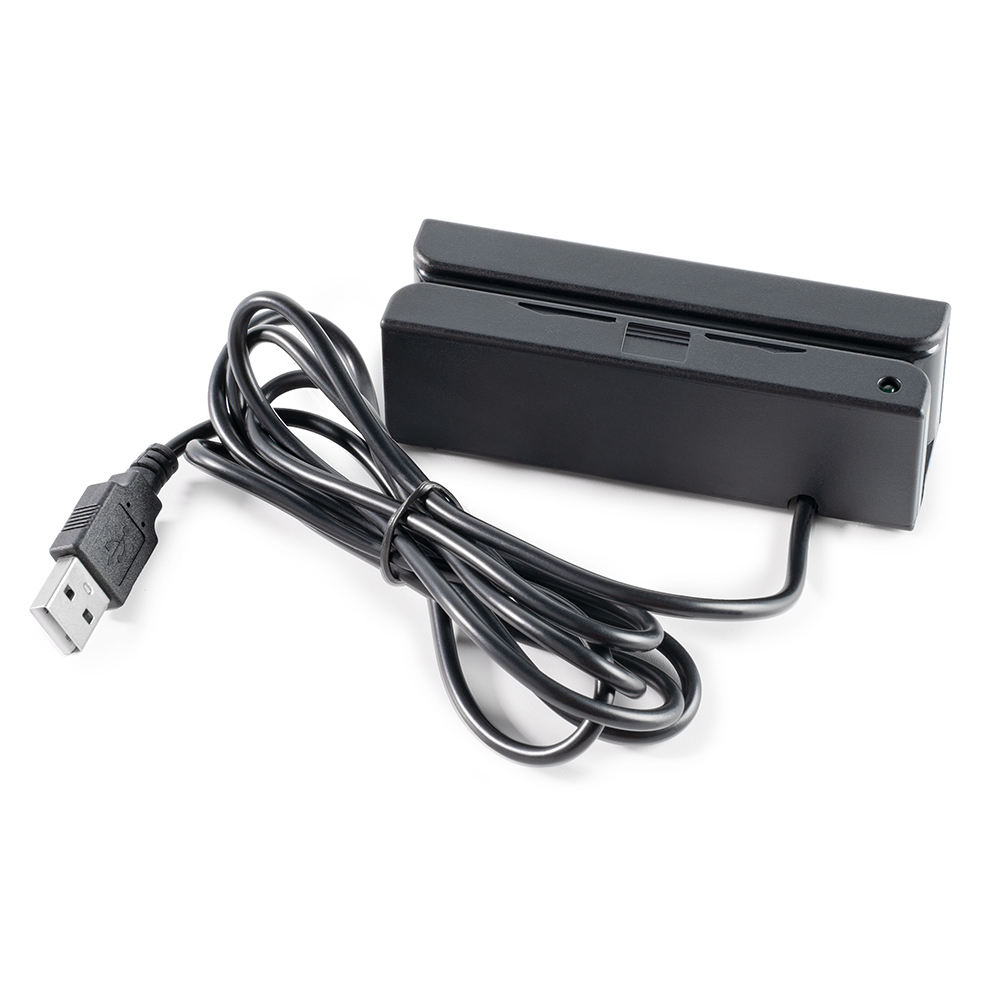
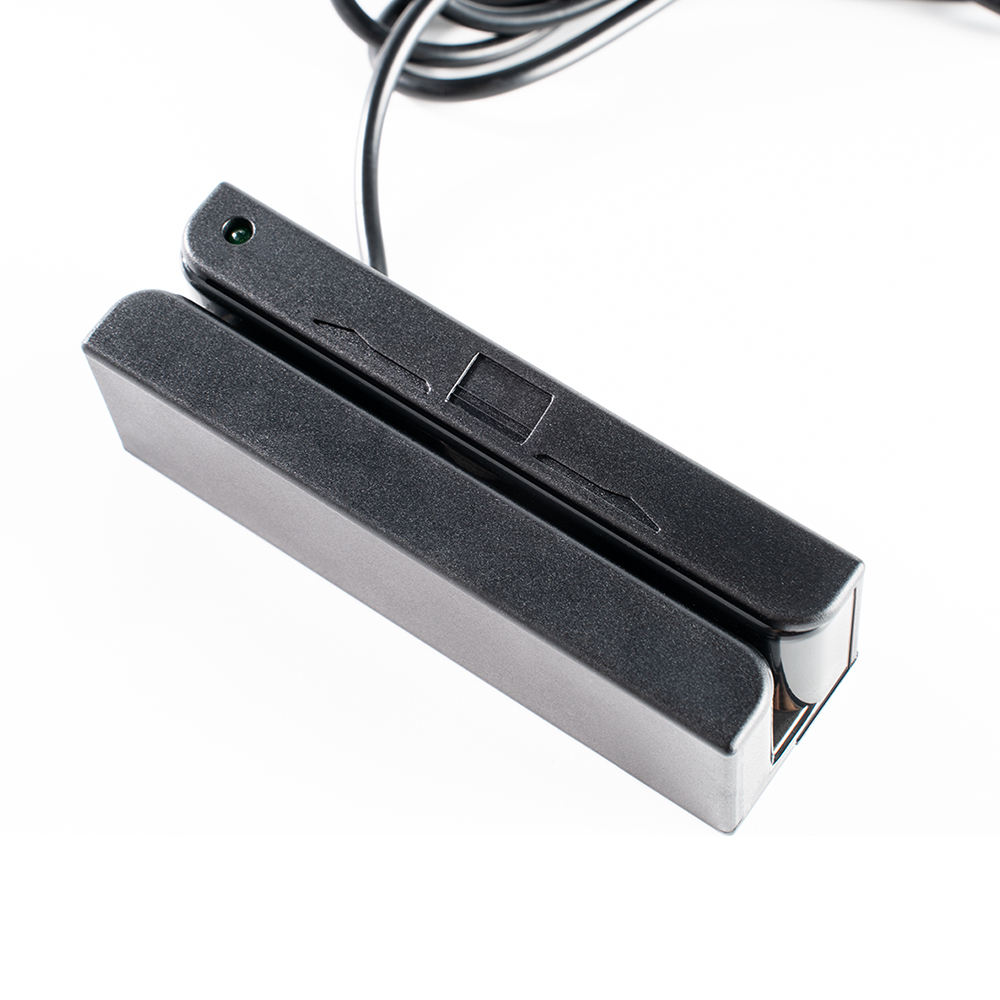
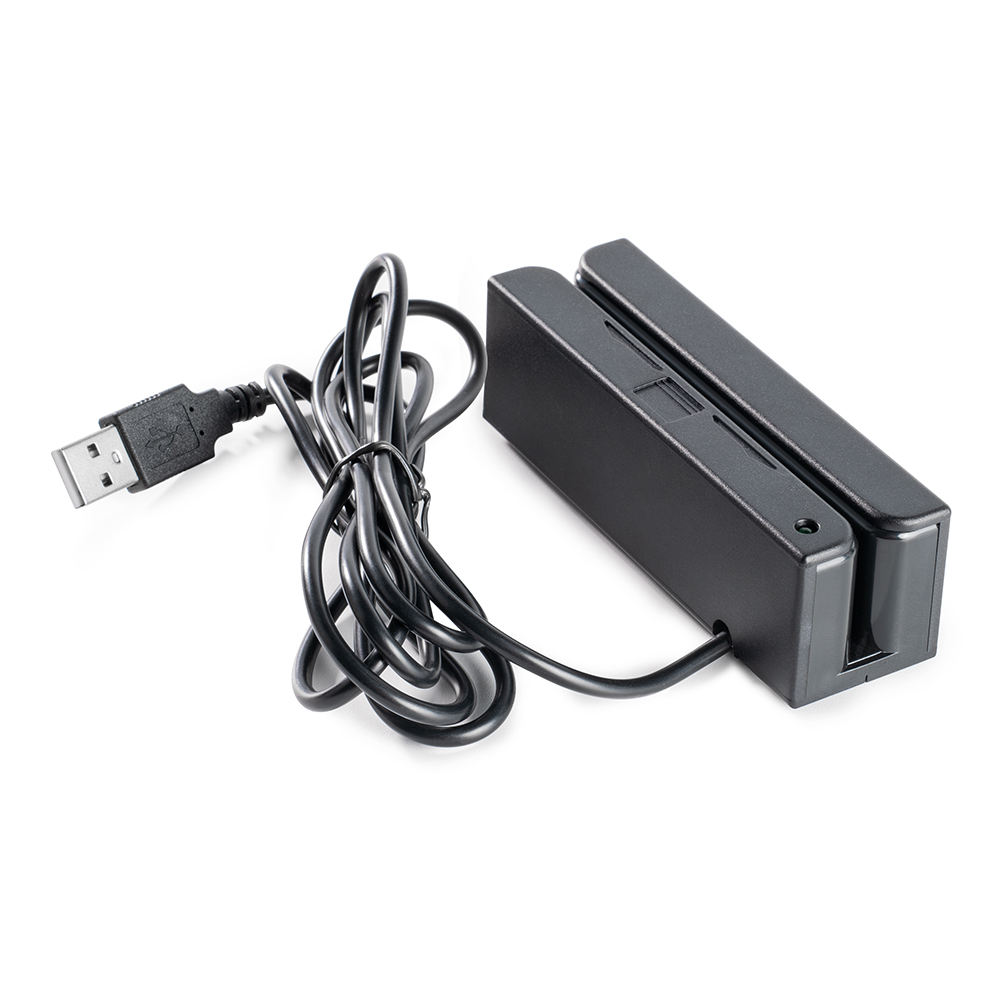
The MSR105X is a three-track reader for exactly that work: 90 × 26 × 28 mm, 100 g, USB, PS/2, RS232 or TTL, with a magnetic head rated for 800,000 swipes.
A magnetic stripe has up to three tracks, and they carry different data at different densities. A reader that only handles track 2 will miss a large part of what is on the card.
Reading all three matters when you do not control the cards. A fleet of staff badges from three suppliers, or loyalty cards issued over ten years, will not be consistent. A three-track reader reads whatever is on the card; a track-2-only reader returns nothing from the card that happens to use track 1 for its identifier.
The unit reads ISO 7811 parts 1–6, which is the banking and general-purpose magnetic stripe standard. It also reads AAMVA, the American Association of Motor Vehicle Administrators format used on driving licences and state ID cards in the US and Canada.
That second standard is worth knowing about because it is where magstripe reading is still genuinely active in 2025-era systems:
If your use case involves reading a licence, confirm the AAMVA requirement with us before ordering — parsing the track data into fields is done by the host software, and the reader’s job is simply to return all three tracks intact.
USB, PS/2, RS232 and TTL. USB and RS232 are the familiar ones; the other two are why this reader is bought by equipment manufacturers rather than only by shops.
That last one is the reason the unit is small: at 90 × 26 × 28 mm and 100 g it fits into a panel cut-out in a device that is not a PC.
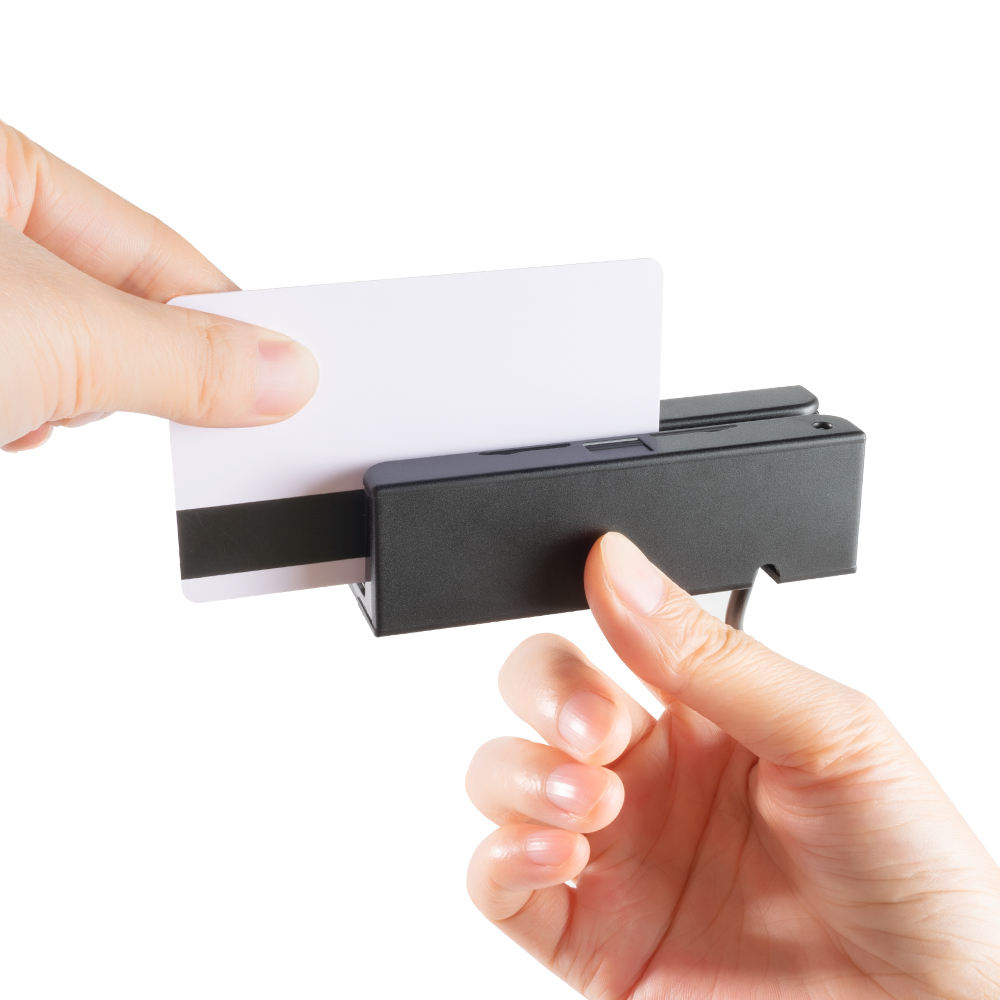
Operation speed is 10–150 cm/s, which covers a slow, careful swipe and a fast one. That range is wide enough that the reader does not impose a technique on the user, which matters in a self-service application where nobody has been trained.
Head life is rated at 800,000 swipes. At a hundred swipes a day that is over twenty years; at a thousand a day — a busy kiosk — it is about two years, at which point the head is a replaceable part rather than a reason to replace the reader. Ask about spare heads if the deployment is high-traffic.
Error rate is specified as less than 0.5%, and reading is bidirectional: the card can be swiped either way. That one detail removes most of the failed-swipe complaints in an unattended application, because the user does not have to know which direction the stripe faces.
Power is DC 5 V at 65 mA maximum, low enough to run from a USB port or from a host board’s 5 V rail. Working conditions are 0–40 °C at 15–85% non-condensing humidity, and the housing is a black plastic case.
It reads the magnetic stripe data, all three tracks. It does not process a payment and is not a certified payment terminal. Use it for loyalty, ID and access cards, or for the stripe data your software already handles.
All three — track 1 at 210 BPI, track 2 at 75 BPI and track 3 at 210 BPI.
Yes, the AAMVA format used in the US and Canada is supported. The host software parses the fields.
No. Reading is bidirectional, so the card works either way round.
No, in USB keyboard mode. RS232, PS/2 and TTL are hardware-level interfaces.
800,000 swipes. At high daily volumes the head is a replaceable part — ask about spares for a kiosk deployment.
12 months minimum. OEM branding and TTL-embedded configurations are available — ask at quotation stage.
Next step: tell us what the cards are (loyalty, ID, access, gift), whether the reader goes inside a device or on a cable, and the host interface — we will confirm the configuration and quote factory-direct. Email sales@dcapos.com or contact us.
Related: DCA-152W foldable-stand POS · POS peripherals · POS-8280A barcode scanner · POS-410A cash drawer · POS systems
|
Model
|
MSR105X
|
|
Standard
|
ISO7781/1~6, AAMVA
|
|
Function
|
Read all 3 tracks
|
|
Recording Density
|
1st track 201 BPI (max 79 characters)
|
|
2nd track 75 BPI (max 40 characters)
|
|
|
3rd track 210 BPI (max 107 characters)
|
|
|
Power Supply
|
DC 5V
|
|
Power Consumption
|
65mA (max)
|
|
Interface
|
USB, PS2, RS232, TTL
|
|
Operation Speed
|
10- 150cm/s
|
|
Lifetime
|
Magnetic head: 800,000 times
|
|
Working condition
|
0~40° C, 15%~85% RH non-condensing
|
|
Error Rate
|
Less than 0.5%
|
|
Dimensions
|
90 x 26 x 28mm
|
|
Weight
|
100g
|
|
Housing
|
Plastic Case, black color
|


First time specifying a magnetic card reader? Read why card is the slow part of a sale before you add a reader, then what a POS system is made of to see which parts a reader replaces.