If you want more information of our industry and products,please contact us.
Get to Know Us Now
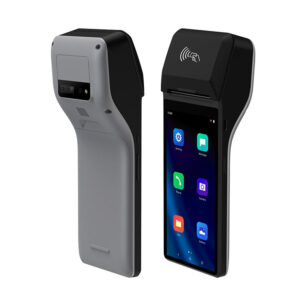
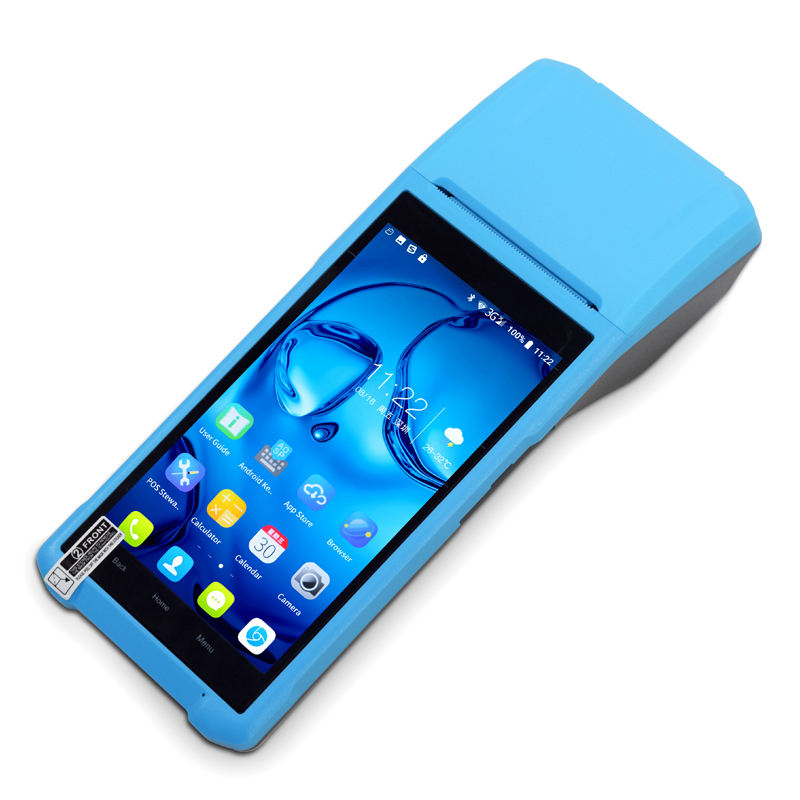
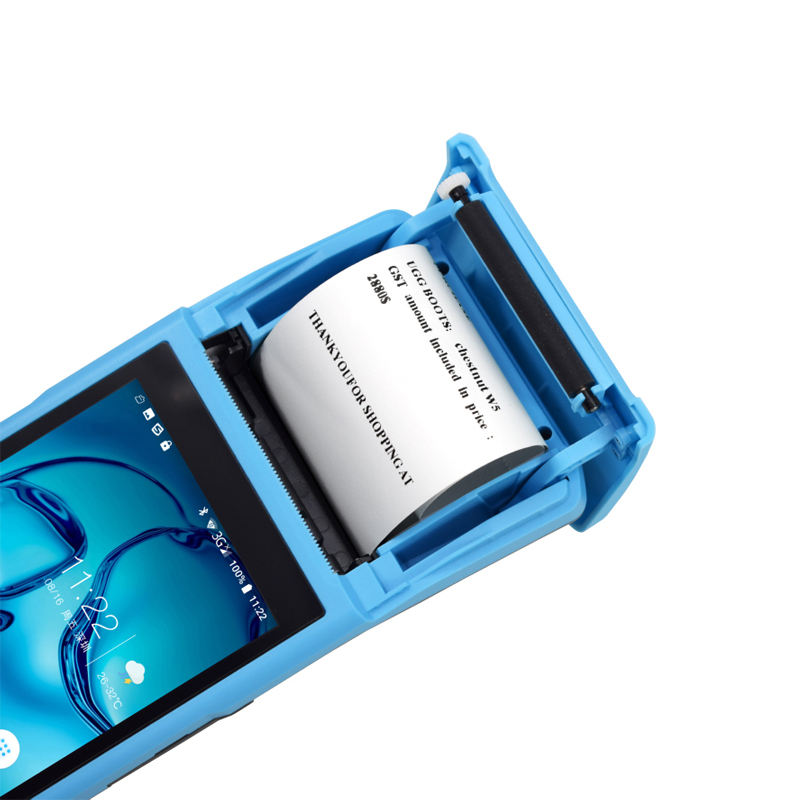
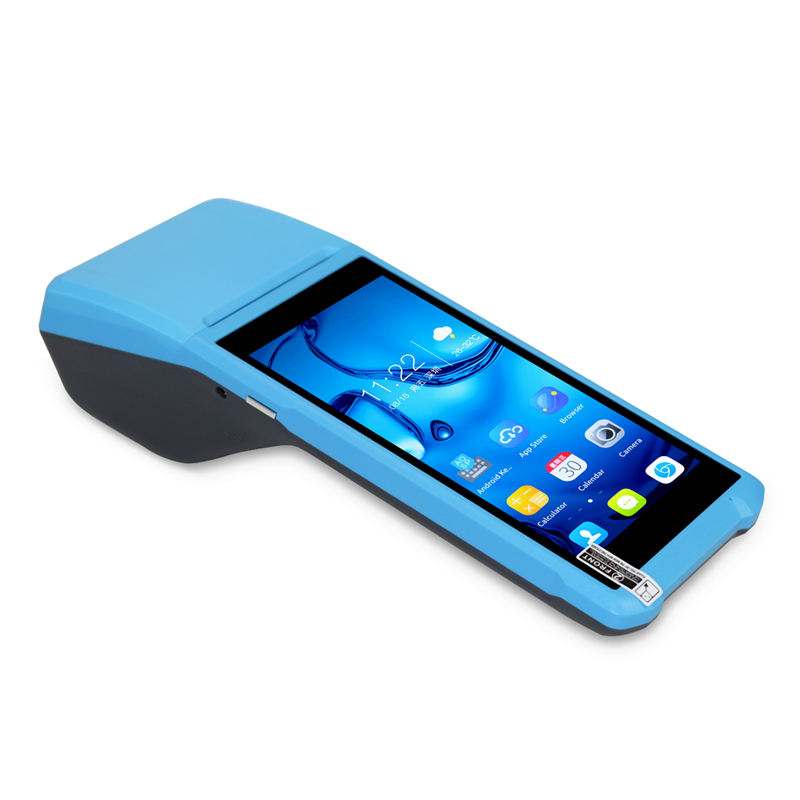
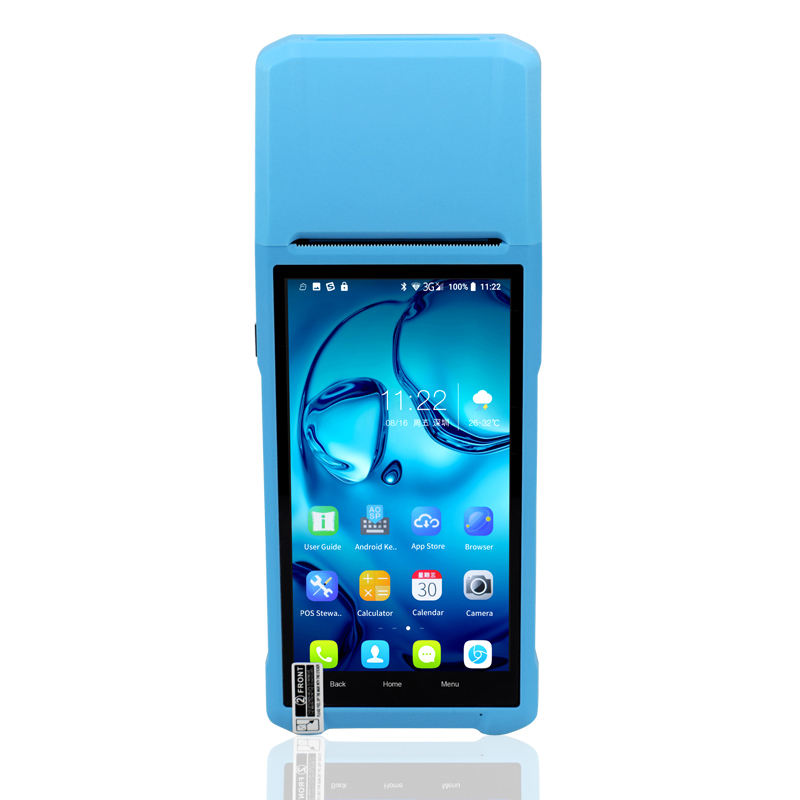
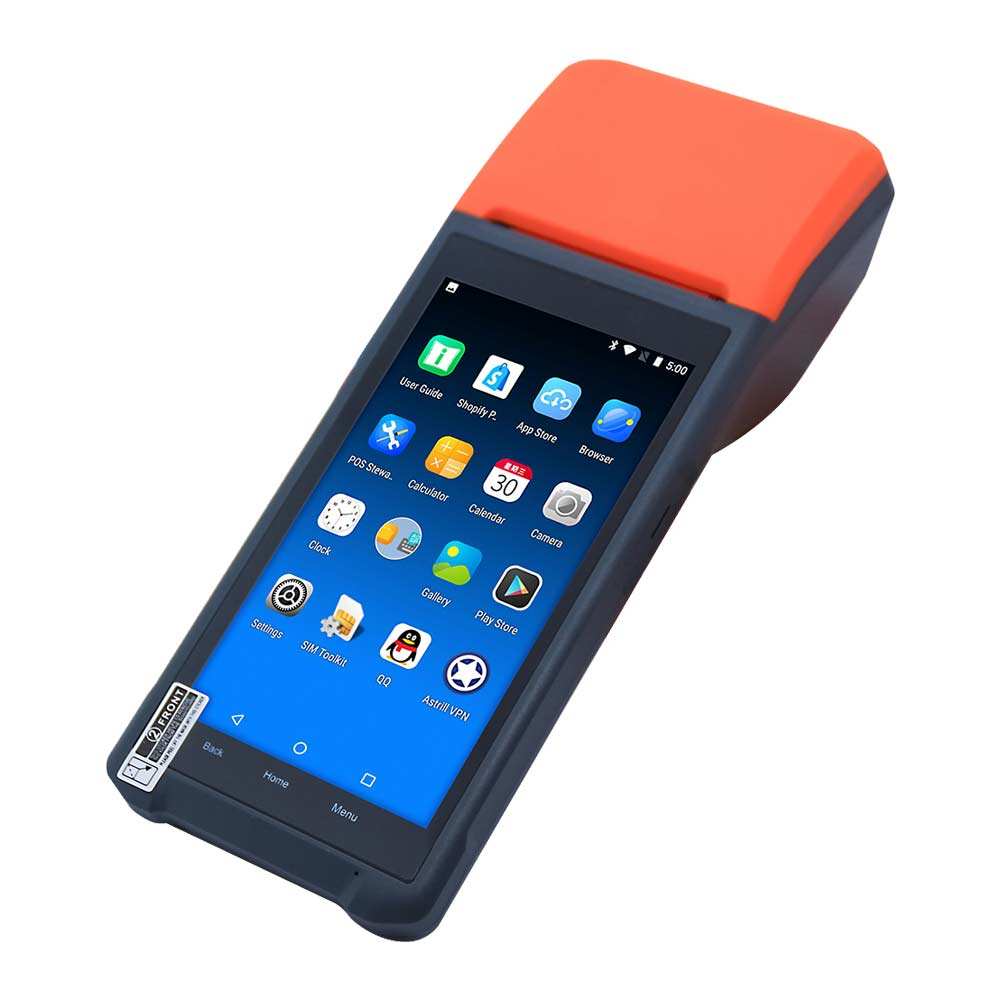
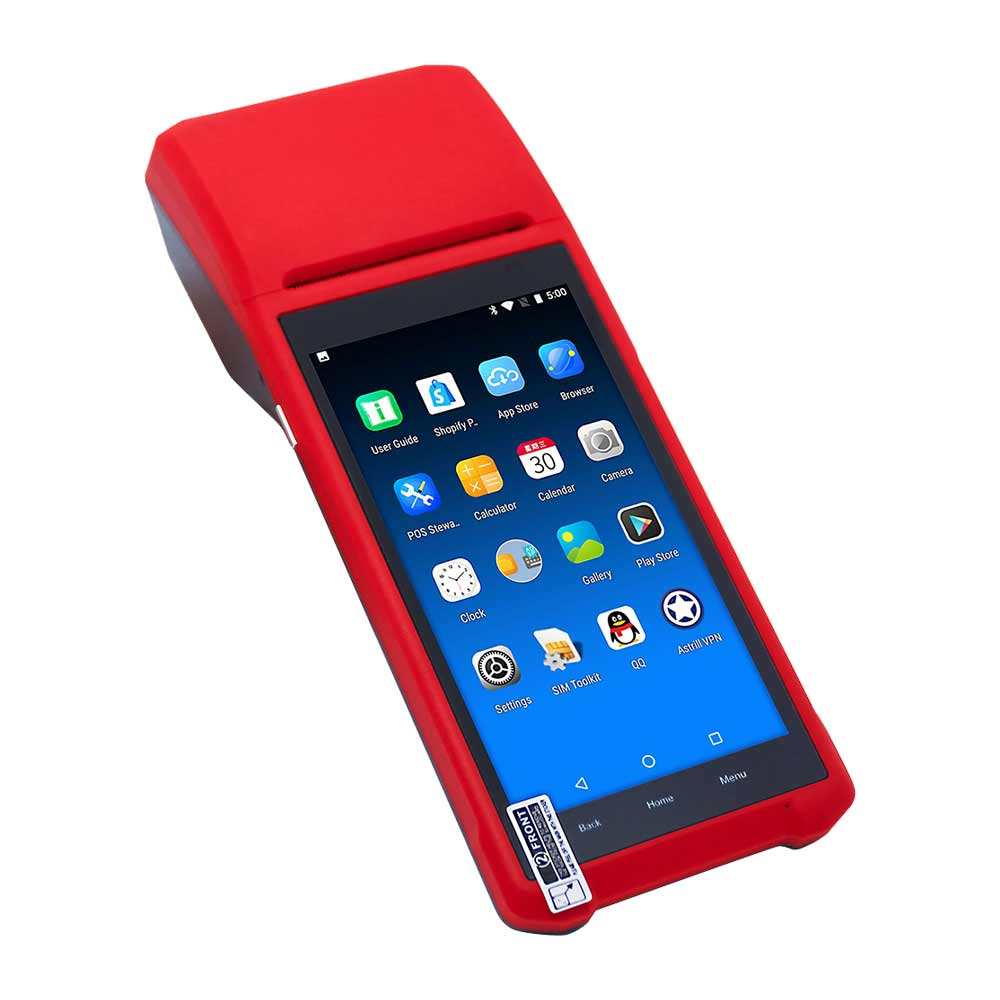
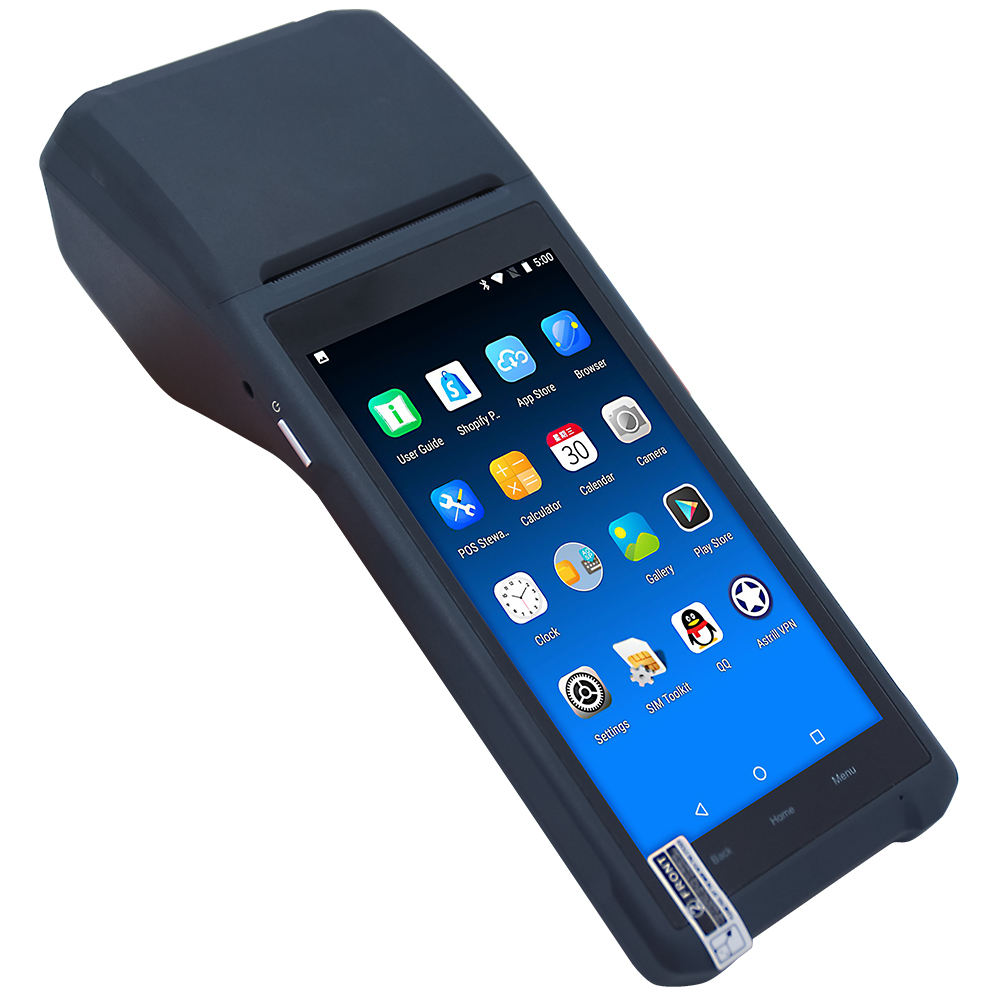
Handheld terminals are usually bought for convenience and then destroyed by the environment: steam, flour, oil, a drop onto tile, a shift that never ends. The DCA-H61 is built for that reality — IP65 sealing, a 7.4 V 5000 mAh battery, a 58 mm printer in the body, and an optional dedicated 1D CCD scan engine, in a body 51.7 mm thick.
It is also the cost-conscious choice in the handheld range: the MT6580 platform brings the entry price down, the MT6739 version brings it back up to modern performance, and both run the same Android build.
The H61 is rated IP65 — dust-tight and protected against water jets from any direction. The H62 in the same range is IP54 — dust-protected and splash-resistant. The gap matters in three places:
Neither rating covers drops. A device that is sealed against water can still break from a 1.5 m fall onto concrete, so a wrist strap or a case is still worth specifying for field use.
This is the detail that decides whether the H61 or the H62 is right for your workflow. The H61 offers an optional dedicated 1D CCD scan head; the H62 uses its 5 MP autofocus camera to decode in software.
So: 1D barcodes at volume → H61 with the scan head. Mixed 2D codes, coupons, tickets and phone screens → H62 with the camera. Buying a camera device for high-volume 1D scanning, or a 1D head for QR-heavy work, is the most common handheld specification error.
The built-in 58 mm printer runs at 50 mm/s, roughly half the 90 mm/s of the H62. Buyers see that number and assume the H61 is the weaker device. In practice, on a short ticket the absolute difference is small: a 12 cm slip prints in about 2.4 seconds instead of 1.3.
Where it changes is volume. A restaurant printing a guest check per order and a kitchen ticket per course will notice the extra second; a site printing a few hundred short slips a shift will not. And the H61 counters with a larger battery: 7.4 V at 5000 mAh carries more energy than the 3.7 V pack in the H62, which is the right trade for a device whose printer runs continuously.
The print head life is rated at 50 km — around 400,000 short tickets. Plan replacement against the site’s volume; on a high-volume site, heads are a consumable line in the budget.
Two builds are offered, and the choice should follow the application:
Storage is 16 GB or 32 GB. If the application caches a product catalogue with images, take 32 GB — the OS and the app take a share before you start.
The device covers GSM 850/900/1800/1900, WCDMA B1/B2/B5 and FDD-LTE B1/B3, plus 2.4 GHz Wi-Fi and Bluetooth 4.0. That band set covers Europe and most of Asia-Pacific; for North American carriers, confirm the band requirement at order stage, because band support is a hardware decision.
The camera is 2 MP fixed-focus — enough for signature capture, proof-of-delivery photos and basic scanning support, not for high-quality imaging. If the workflow depends on the camera for decoding, that is an argument for the H62’s autofocus 5 MP unit instead.
The 5.5-inch HD display is 1280 × 720 with G+FF capacitive multi-touch, and there are only two physical keys: power and scan. That minimalism matters in a gloved or wet hand — fewer buttons to press by accident, one big scan key where the thumb expects it.
The unit is FCC certified (ID 2A2TN-210868), which removes a certification question for US deployments of the radio module.
No. The optional CCD head is a 1D engine. For 2D codes, take the camera-based H62 or a device with a 2D imaging engine.
It is IP65 — dust-tight and jet-resistant. It is not submersible, and it is not drop-rated.
A full shift of intermittent scanning and printing on a 7.4 V / 5000 mAh pack. Heavy continuous printing will shorten that; keep a spare battery for multi-shift sites.
Yes, through the ESC/POS-compatible command set — the same commands used by the counter printers in the range.
58 mm thermal roll, maximum 42 mm diameter. Smaller than a counter printer’s roll, which is the compromise for a device that fits in one hand.
2 GB for a single app doing order entry or scanning. 3 GB if the terminal runs a heavier UI, a locally cached catalogue with images, or two apps at once.
Next step: tell us the workflow, whether you scan 1D labels or 2D codes, the environment (kitchen, warehouse, outdoor) and your target unit price — we will confirm the platform and quote factory-direct. Email sales@dcapos.com or contact us.
Related: DCA-M30 smart POS terminal · mobile POS and handheld terminals · DCA-H62 handheld terminal · DCA-H20 handheld PDA · POS peripherals
|
O/S
|
Android 8.1/Android 11(Option)
|
|
CPU
|
4 Core MT65801.3GHz/4Core MT67391.5GHz
|
|
RAM
|
2GB/3GB
|
|
Flash
|
16GB Nand Flash/32GB Nand Flash
|
|
Display
|
5.5″HD Screen,Highest Resolution 1280×720
|
|
Touch
|
G+FF Capacitive Multi-Touch
|
|
Camera
|
2,000,000 Fixed Focus
|
|
Scanner
|
1D CCD Scanner(Option)
|
|
Network
|
GSM:850/900/1800/1900 WCDMA:B1,B2,B5
FDD-LTE:B1/B3/B5/B7/B8/B20 TDD-LTE:B38/B39/B40/B41 GPS+AGPS |
|
Bluetooth
|
Bluetooth 4.0
|
|
WIFI
|
WIFI802.11 b.g.n
|
|
Speaker
|
1W Single Channel
|
|
Microphone
|
MIC Input
|
|
Button
|
Power button,Scan Button
|
|
I/O
|
Charging Socket,USB,SIM Slot
|
|
Battery
|
7.4V/5000mAh
|
|
Printer
|
58mmThermal Receipt Printer
|
|
Printing Speed
|
Printing Speed 50mm/S
|
|
Work Life
|
Work Life 50 Km
|
|
Paper Roll
|
Max Diameter 42mm
|
|
PowerAdapter
|
Input:100-240V/1.5A 50/60HzOutput:12V1.5A
|
|
Dimension
|
209.2mm(L)×87.4mm(W)×51.7mm(H)
|
|
FCCID
|
2A2TN-210868
|


First time specifying a 5.5-inch handheld POS? Read countertop, handheld, kiosk or tablet before you decide the till has to be fixed, then what a POS system is made of to see what still has to stay on the counter.