Ask a sourcing manager what they are looking for and the answer is usually the same: a POS factory in China. Ask someone who has actually built terminals here for a decade and the answer changes. There is no such thing as a POS factory. There is a supply chain that happens to sit inside a 120-kilometer radius, and every supplier you talk to owns a different slice of it.
The distinction matters at quotation stage. Two suppliers quote the same 15.6-inch Android terminal — same CPU, same RAM, same 4:3 panel — and the prices differ by 30%. Neither is lying. They are buying different things from different towns, and one of them is passing a markup on parts they never touched.
This is a map of where those parts actually come from, what each location decides about the finished product, and how to ask a supplier which slice they own. It is written from inside the chain — we build Android and Windows terminals in Shenzhen — and it deliberately names no competitors, because the point is the structure, not the roster.
A POS terminal passes through nine processes, and they are not in one city
Below is the split as it exists on the ground for a mid-volume Android or Windows terminal. The right-hand column is what you can actually check before you wire a deposit.
| Process | Where it usually sits | What it decides | How to verify |
|---|---|---|---|
| Board design and SMT | Shenzhen (Bao’an, Longhua, Guangming) | Whether the layout survives heat, and whether a component swap needs a re-spin | Ask for a line video with a timestamp; ask who owns the stencil and the AOI program |
| Panel and touch bonding | Panel glass from Shenzhen / Wuhan / Kunshan; bonding mostly Shenzhen | Dust ingress and sunlight readability — full-lamination vs air-gap is a different product | Ask for the bond type in writing, not “high brightness screen” |
| Enclosure tooling | Dongguan (injection, die-cast, sheet metal) | Whether you can move to another assembler later without paying for a new mould | Ask whose name is on the mould ownership certificate |
| Print head and mechanism | Heads from Japan; mechanism assembly in Weihai and Guangzhou | Whether 50 km of receipts later the print is still legible | Ask for the head grade and the rated print length, not the printer brand |
| Scan engine | Modules assembled in Shenzhen, Fuzhou, Hangzhou | Whether a worn barcode reads first time or fails silently | Ask for 1D laser vs 2D imager explicitly — vendors blur the two |
| Power supply and adapter | Shenzhen and Dongguan | Whether the whole unit can carry CE/UL at all, or only a CCC sticker | Ask for the adapter’s own certificate number, not the terminal’s |
| Cable and connectors | Dongguan and Shenzhen | RJ11 and RJ45 pinouts — the most common cause of a drawer that will not open | Ask for a pinout drawing before you approve the sample |
| Final assembly and ageing | Shenzhen and Dongguan | Infant mortality in the first 90 days | Ask ageing duration and temperature; 30 minutes and 48 hours are different products |
| Compliance testing | Third-party labs with branches in Shenzhen | Whether the certificate is transferable to your brand or tied to theirs | Ask who is the applicant on the certificate — it should be you |
Shenzhen: the board, the glass and the final assembly in one radius
Shenzhen is not one thing. Within the city, the work splits again: Bao’an and Guangming carry most of the SMT capacity and the enclosure assembly, Longhua and Futian carry the design houses and the trading layer. What makes Shenzhen different from anywhere else is not cheap labour — it has not been cheap for a decade — it is that a BOM change can be sourced, sampled and re-run inside 48 hours.
That density is also why so many suppliers can credibly claim to be a factory. A company with two assembly benches and no SMT line is still, technically, assembling in Shenzhen. The honest question is not “are you a factory” but “which of the nine steps above happen inside your own gate”.
For buyers, the practical consequence is that Android terminals and Windows terminals from the same city can still differ enormously in thermal design, because the board layout is where the difference is decided, not the assembly line.
Dongguan: the tooling and the parts Shenzhen stopped making
Dongguan is where the physical product becomes physical. Injection moulds, die-cast housings, sheet-metal brackets, cable harnesses and most of the connectors come from here, usually within an hour of the Shenzhen assembler.
This is also where the least visible commercial risk sits. Moulds are expensive — a 15.6-inch front bezel with a clean parting line is a five-figure tool — and suppliers routinely have the mould made under the toolmaker’s name to save paperwork. If you later want to move production, the mould does not move with you. Ask for the ownership certificate at sample stage, not at the point you want to leave.
Why the print head and the panel come from somewhere else
Two components break the Shenzhen pattern, and both are worth understanding because they drive both cost and failure rate.
Thermal print heads are not made in Shenzhen. The head itself — the ceramic substrate with the heater line — comes from a small number of Japanese suppliers. What happens in Weihai and Guangzhou is mechanism assembly: the head, the platen roller, the stepper motor and the cutter are put together and calibrated. This is why two 80 mm printers that look identical can differ by a factor of three in print life. The 80 mm printer you buy is not the head; it is the head plus the mechanism tolerance around it.
Panels follow a similar logic. The glass comes from a handful of fabs — Shenzhen, Wuhan and Kunshan carry most of the mid-size industrial lines — but the bonding that turns glass into a usable touch module is done locally. Full lamination with OCA removes the air gap; frame bonding leaves one. The difference shows up as dust under the glass after six months in a kitchen, and as a washed-out screen under a window at noon. Both are sold as “industrial touch display”.
Where a 30% price gap actually comes from
When two quotes for the same nominal specification differ by a third, the gap is almost always in the same three places.
| Line item | Cheap version | What it costs later | Share of the gap |
|---|---|---|---|
| Touch bonding | Frame bond with an air gap | Dust ingress, weaker sunlight readability, higher field return rate | 8–15% |
| Print head grade | Compatible or ungraded head | Faded receipts at 20–30 km instead of 50 km; head replacement inside warranty | 20–40% of printer BOM |
| Power and certification | Uncertified adapter, terminal-only CCC | Cannot ship to EU/US without re-testing; certificate tied to the supplier | 3–8 USD per unit |
None of these appear on a quotation sheet as a line item. That is the point. A quote that lists CPU, RAM, screen size and price is not a specification — it is a headline. The three rows above are what you are actually choosing between.
Seven process questions that tell you what you are buying
These are the questions we get asked by buyers who have been burned before. Each one has a specific answer shape, and each answer tells you something you cannot get from a catalogue.
- Is the SMT line yours? If it is outsourced, a component shortage puts you in a queue behind that line’s regular customers, and nobody will tell you where you are in it.
- Who bonds the touch panel? If the panel supplier does the bonding, the failure mode is fixed and you inherit it. If the assembler does it, they can change bond type on request.
- Whose name is on the mould? The answer should be yours, or at least contractually transferable. “We have a mould” and “you have a mould” are different sentences.
- Which print head grade, and rated for how many kilometres? A number with a unit, or it is marketing.
- Does the adapter carry its own certificate? A terminal certificate issued against an uncertified adapter is a certificate you cannot reuse in another market.
- How long is ageing, at what temperature? Anything under four hours is a smoke test, not an ageing test.
- What is the spare-part commitment, and are the key parts still sourced? This is the question that decides whether year four of the fleet is cheap or expensive. We wrote a separate piece on what end-of-life actually does to a deployed fleet.
If you want the longer version of this list — fifteen questions instead of seven, with the follow-ups that catch a rehearsed answer — that is in the supplier vetting checklist.
From sample to mass production: where the calendar goes
Buyers consistently underestimate the front end of a project and overestimate the back end. The shape of a realistic schedule for a customised terminal:
- Tooling: about 25 days. Longer for die-cast, shorter for sheet metal. This is the step that cannot be compressed by paying more, only by choosing a simpler housing.
- Certification: 6 to 10 weeks. CE and FCC run in parallel; UL does not. If the adapter changes mid-project, the clock restarts.
- Trial production: three rounds. The first proves the process, the second proves consistency, the third proves yield. Skipping round two is how a pilot batch passes and the first container fails.
That is roughly four to five months before the first saleable unit, assuming the design is frozen. The full development timeline breaks the same path down week by week, and the quality-control sequence explains what each trial round is actually checking.
Two risks of a concentrated supply chain
Concentration is why Chinese POS hardware is competitive. It is also why two things happen that buyers rarely plan for.
The first is sameness. When everyone buys from the same board houses, the same panel bonders and the same mechanism assemblers, the internal architecture converges. Two brands that look different on a landing page can share a mainboard and a power design. This is not fraud, it is arithmetic — and it means the differentiation you are paying for is often in the enclosure, the firmware and the support, not the silicon.
The second is shared exposure. A power restriction, a port delay or a single supplier’s quality event propagates across every assembler buying the same component in the same week. Diversifying your assemblers does not diversify your risk if both buy the same panel. Ask for the component-level source, not the factory-level source.
Where DcaPOS sits in this chain
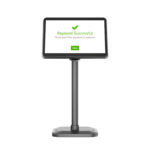
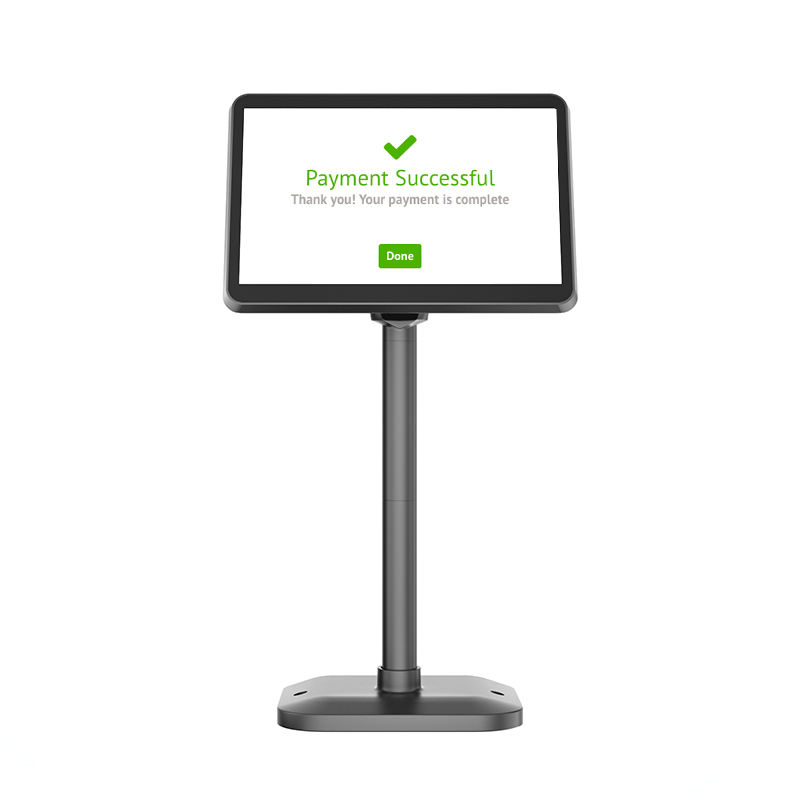
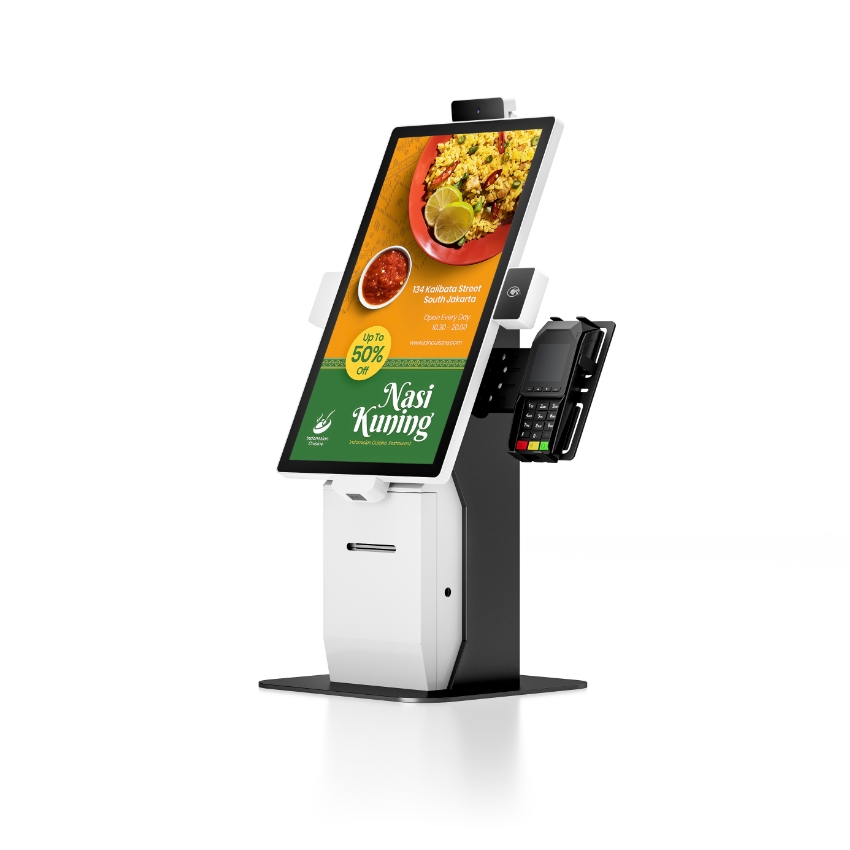
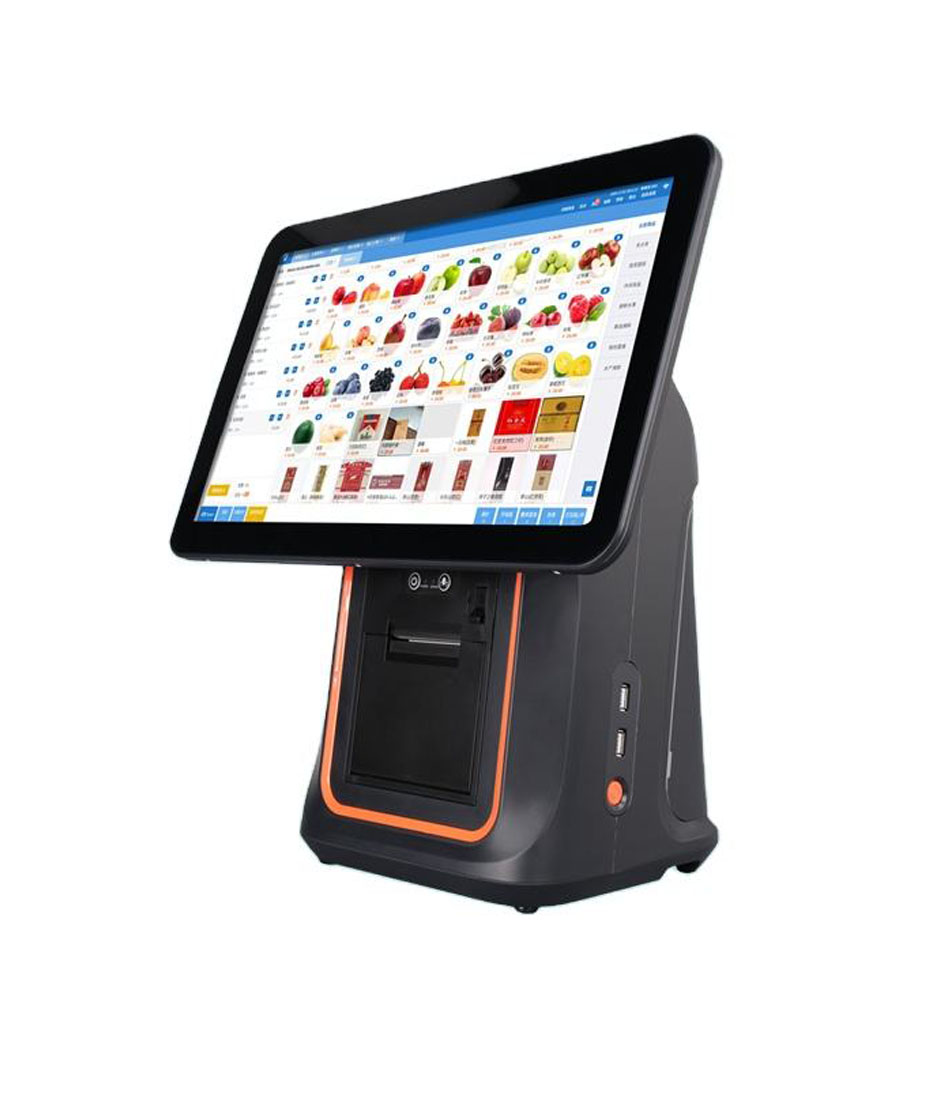
We are in Shenzhen, founded in 2013 as Shenzhen Daka Electronics. What we own is design, engineering, final assembly, ageing and the compliance relationship; what we buy is panels, print heads, scan engines and a share of the enclosures — the same split described above. Our product range spans Android POS, Windows POS, self-service kiosks, touch monitors, thermal printers and fanless mini PCs, all under ISO 9001 and ISO 14001.
We are stating the boundary on purpose. A supplier that claims to own all nine steps is either very large or not being precise. Asking where the line is drawn is the fastest way to find out which one you are talking to — and it is the first question we answer in an OEM/ODM conversation.
Questions buyers ask us about Chinese POS manufacturing
Are all POS hardware manufacturers in China actually factories?
No. There are three shapes: companies with their own SMT and assembly, companies that assemble from purchased boards, and trading companies that never touch the product. All three are legal and all three can deliver. What differs is who absorbs a quality problem, and whether a design change costs you a week or a quarter. The nine-process table above is the fastest way to classify a supplier in one call.
Which city should I source a POS terminal from?
For complete terminals, Shenzhen and Dongguan. For thermal printer mechanisms, Weihai and Guangzhou. For panel bonding, Shenzhen. There is no advantage in going to a city for a component that city does not make — you are just adding a middle layer. Map your BOM to the table, then source the terminal where most of the steps already sit.
How do I verify a factory without flying there?
Four documents, all cheap to ask for and hard to fake: a business licence whose scope includes manufacturing of the product category, a time-stamped video of the SMT line running your board, three months of export declarations in the supplier’s own name, and the mould ownership certificate. A supplier who can produce all four in a day is a factory. One who produces two is telling you something useful about the other five steps.
If you are shortlisting suppliers now, send the nine-process table to each of them and ask which rows they own. The answers sort themselves. For project-specific questions — panel size, print width, kiosk configuration — our engineering team answers with specification sheets rather than brochures.
Where to go next
the five parts of a POS system · types of POS systems, by shape