Artificial intelligence is changing the way businesses use technology.
For restaurants and retailers, AI is no longer limited to chatbots, marketing content, or experimental applications. In 2026, AI is increasingly being connected to the systems that businesses already use every day—including their Point-of-Sale (POS) systems.
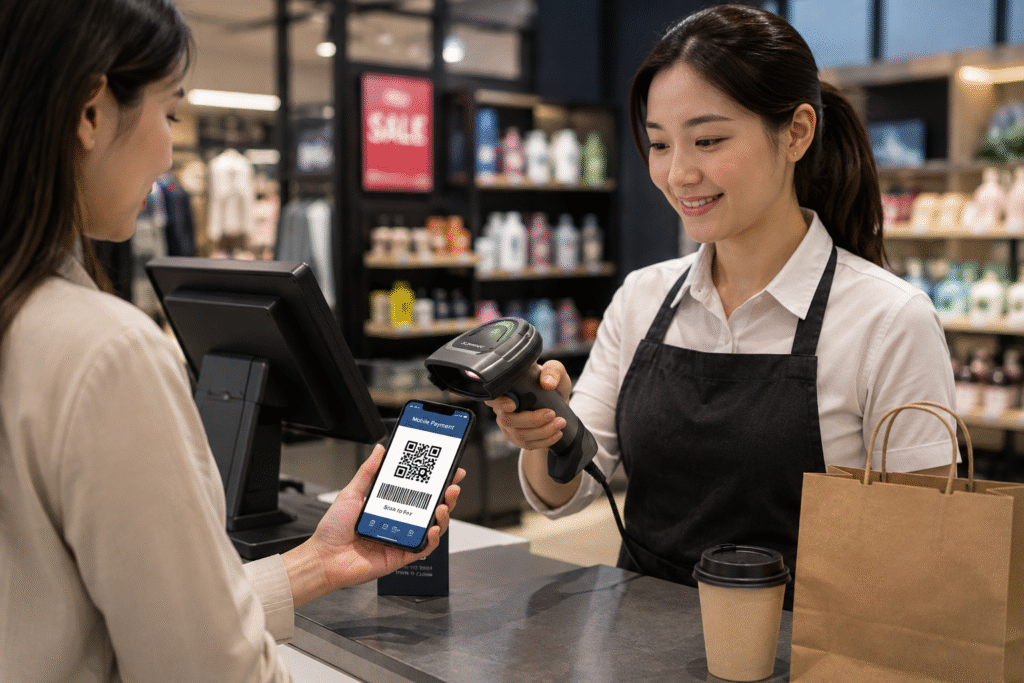
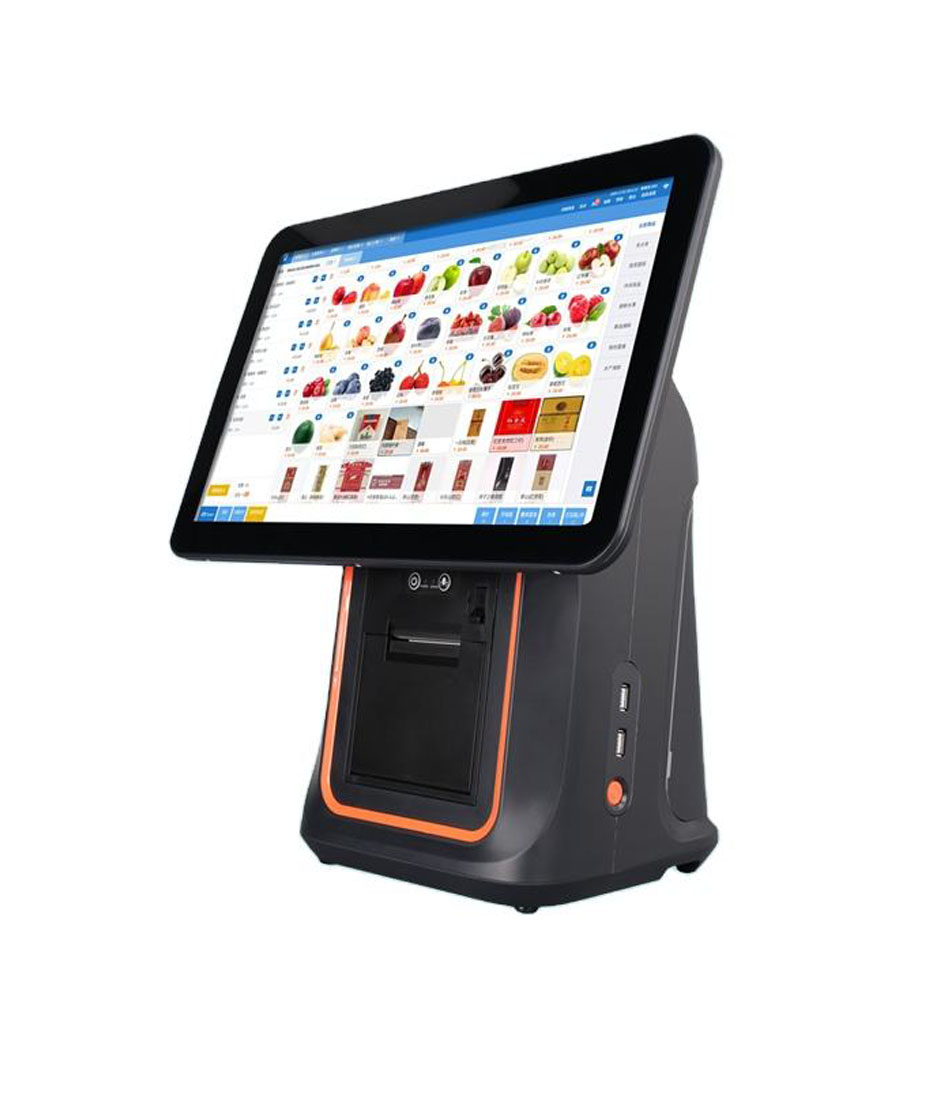
A modern POS system can do much more than process transactions.
When connected to sales, inventory, customer, labor, and operational data, AI can help businesses understand what is happening, identify potential problems, and make better decisions.
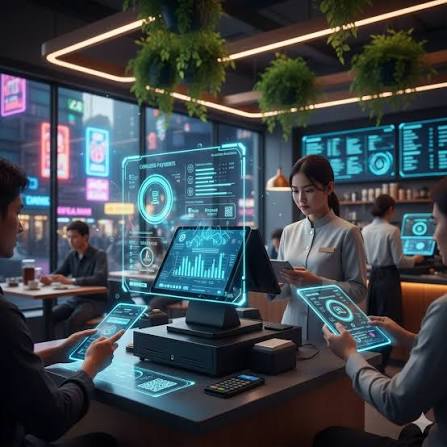
This is creating a new generation of AI-powered POS systems designed not only to process transactions, but also to support business operations.
So what does AI actually mean for POS systems, and what role does POS hardware play in this transformation?
Let’s take a closer look.
What Is an AI-Powered POS System?
A traditional POS system primarily performs operational tasks:
- Processing transactions
- Managing products
- Printing receipts
- Recording sales
- Managing payments
- Tracking inventory
An AI-powered POS system adds an intelligence layer on top of these functions.
Instead of simply recording what happened, the system can analyze business data and help answer questions such as:
- What were today’s best-selling products?
- Which products are declining in sales?
- When should we reorder inventory?
- Which menu items should we promote?
- When do we need more employees?
- Why did sales decrease this week?
- Which products are frequently sold together?
- What operational problems need attention?
This changes the role of the POS from a transaction system into an operational intelligence platform.
Why AI Is Becoming More Important for POS Systems in 2026
Restaurants and retailers generate enormous amounts of data every day.
A typical POS system may collect information about:
- Transactions
- Products
- Prices
- Discounts
- Customers
- Inventory
- Employees
- Payment methods
- Order times
- Store performance
The problem is that having data does not automatically mean a business can use it effectively.
Managers may have thousands of transactions but still spend hours preparing reports and trying to understand what the numbers mean.
AI can help turn this data into actionable information.
Recent restaurant-industry data illustrates this shift. Toast reported that, among restaurants using its AI assistant during Q1 2026, sales and revenue were the most common topic, followed by menu and inventory, guest and marketing, and operations and reporting.
This suggests that AI in POS is moving beyond experimentation and toward everyday business operations.
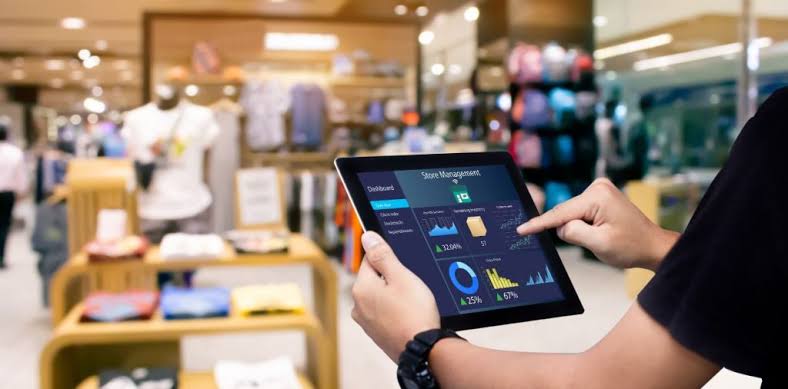
1. AI Can Analyze Sales Performance
One of the most practical applications of AI in a POS system is sales analysis.
Instead of manually reviewing reports, a restaurant manager could ask:
“Which products generated the most revenue yesterday?”
Or:
“Why were sales lower on Tuesday?”
An AI system can analyze historical transaction data and provide a summary.
It may identify:
- Top-selling products
- Slow-moving products
- Peak sales periods
- Average transaction value
- Sales trends
- Changes compared with previous periods
This makes business data much easier to understand.
2. AI Can Help With Inventory Management
Inventory management is another major opportunity.
Restaurants have to balance two problems:
Too much inventory
This increases waste and holding costs.
Too little inventory
This can lead to stockouts and lost sales.
AI can analyze historical sales, seasonality, promotions, holidays, and other available data to help estimate future demand.
For example:
“Based on the last six weeks of sales, which ingredients are likely to run out this weekend?”
The POS system can then provide recommendations for purchasing or replenishment.
This is especially valuable for restaurants selling products with short shelf lives.
3. AI Can Improve Menu Optimization
Menu optimization is becoming another important use case.
AI can analyze:
- Product sales
- Profit margins
- Order frequency
- Customer preferences
- Product combinations
- Time-of-day performance
For example, an AI system may discover that customers who purchase a particular burger frequently purchase a specific beverage.
The restaurant could then create an upselling recommendation.
AI can also help identify menu items that have:
- High sales but low margins
- Low sales and low margins
- Strong seasonal demand
- Potential upselling opportunities
Toast’s 2026 restaurant data showed that menu optimization was one of the most prominent growth-related topics among operators using its AI assistant.
4. AI Can Support Labor Planning
Labor is one of the biggest operating costs for restaurants.
A POS system already knows when transactions happen.
AI can analyze historical patterns to identify busy periods and slower periods.
For example:
Monday
11:00–14:00 → High demand
14:00–17:00 → Low demand
18:00–21:00 → High demand
Instead of relying entirely on intuition, managers can use historical data to make staffing decisions.
AI can potentially help answer:
“How many employees do we typically need during Friday dinner?”
This does not mean AI replaces restaurant managers.
Instead, it gives managers better information for making decisions.
5. AI Can Help Identify Operational Problems
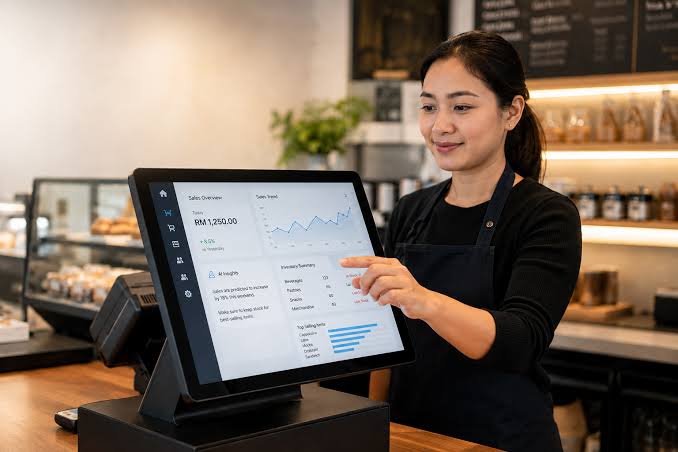
One of the most interesting applications is anomaly detection.
An AI-powered POS system can look for unusual patterns.
For example:
- Sales suddenly drop
- Refunds increase
- A product becomes unusually popular
- Average transaction value decreases
- A particular store performs below expectations
Instead of waiting for a manager to notice the problem, the system can highlight it automatically.
This creates a shift from:
Reporting → Monitoring → Predictive insight
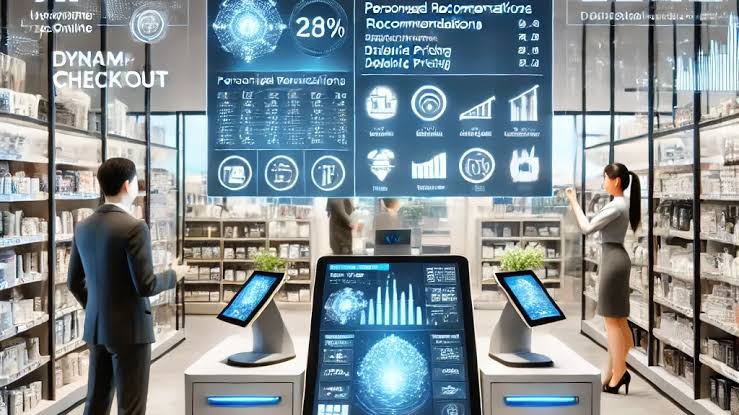
6. AI-Powered POS Can Improve Customer Experience
AI can also be used to personalize customer interactions.
Depending on the POS ecosystem and available customer data, AI may support:
- Personalized recommendations
- Loyalty programs
- Targeted promotions
- Customer segmentation
- Upselling
- Cross-selling
For example, a coffee shop could identify customers who frequently purchase coffee but rarely purchase food.
The system could then recommend an appropriate promotion.
The goal isn’t simply to sell more.
It is to make recommendations more relevant to customers.
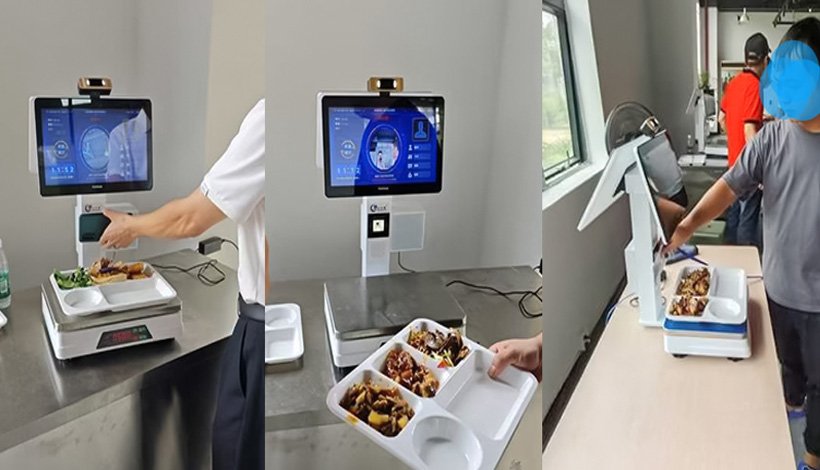
7. AI and Self-Ordering Kiosks
AI is also creating opportunities for self-ordering kiosks.
A traditional self-ordering kiosk presents a fixed menu.
An AI-enabled kiosk could potentially provide a more interactive ordering experience.
For example:
“I want something spicy but not too heavy.”
The system could recommend suitable menu items based on the restaurant’s available products.
AI can also potentially help with:
- Natural-language ordering
- Product recommendations
- Upselling
- Multilingual interaction
- Personalized menus
This creates an important connection between AI software, POS systems, and kiosk hardware.
8. AI Doesn’t Eliminate the Need for POS Hardware
This is an important point.
AI may be software-driven, but it still depends on reliable hardware.
An AI POS system still needs a physical platform for:
- Touch interaction
- Payment integration
- Barcode scanning
- Receipt printing
- Customer display
- Network communication
- Peripheral connectivity
This is why the development of commercial POS hardware remains important even as AI capabilities become more advanced.
The hardware becomes the interface between the AI-powered software ecosystem and the physical business environment.
9. Why AI POS Systems Need Better Hardware Integration
As POS systems become more intelligent, hardware integration becomes increasingly important.
A modern restaurant POS ecosystem may include:
POS Terminal
↓
Customer Display
↓
Barcode Scanner
↓
Receipt Printer
↓
Cash Drawer
↓
Payment Terminal
↓
Kitchen Display System
↓
Self-Ordering Kiosk
All of these devices may generate or consume operational data.
The more connected the ecosystem becomes, the more important hardware compatibility and reliable communication become.
10. Edge AI vs Cloud AI for POS Systems
Another important technology question is where AI processing should happen.
Cloud AI
Data is sent to cloud servers for processing.
Advantages include:
- Powerful computing resources
- Easier model updates
- Centralized management
- Suitable for large-scale data analysis
However, it requires reliable network connectivity.
Edge AI
AI processing takes place locally on the device or at the edge.
Advantages can include:
- Lower latency
- Reduced dependence on cloud connectivity
- Better local responsiveness
- Potentially improved data control
For POS hardware manufacturers, this creates new design considerations around:
- CPU performance
- NPU capability
- Memory
- Storage
- Thermal management
As AI workloads become more common, hardware platforms may need to evolve accordingly.
11. The Importance of Data Quality
AI cannot solve every problem automatically.
One of the most important requirements for successful AI implementation is high-quality data.
If a restaurant has:
- Incomplete product information
- Incorrect inventory records
- Fragmented ordering systems
- Inconsistent customer data
AI recommendations may not be reliable.
IDC has highlighted this issue in 2026, noting that AI investments in retail and restaurants can struggle when underlying data systems are fragmented or not prepared for real-time decision-making.
This means businesses should think about data infrastructure and system integration before AI features.
12. POS Integration Is Becoming More Important
The future of AI POS systems is unlikely to be a single isolated application.
Instead, POS will increasingly connect with:
- ERP
- CRM
- Inventory systems
- E-commerce
- Delivery platforms
- Loyalty platforms
- Payment systems
- Workforce management
- AI services
A 2026 POS industry study found that strengthening system integration was identified as a major strategic goal by 90% of restaurant respondents, while 33% planned to add AI-driven modules or features to existing POS systems.
This is an important signal for both POS software companies and hardware manufacturers.
13. What Does This Mean for POS Hardware Manufacturers?
The rise of AI does not mean that POS hardware becomes less important.
It means hardware requirements are changing.
Future commercial POS terminals may increasingly need:
More Powerful Processors
To support advanced applications and local AI workloads.
Better Connectivity
For connecting multiple business devices and cloud services.
Larger Memory and Storage
To support increasingly complex applications.
Longer Product Lifecycles
Businesses cannot replace thousands of POS terminals every year.
Better Thermal Design
Higher computing performance can generate additional heat.
Flexible Hardware Platforms
Different software companies may have different AI and peripheral requirements.
For manufacturers, the challenge is not simply building a faster POS terminal.
It is building a platform that can support the next generation of software.
14. What Should Businesses Look for in an AI-Ready POS Terminal?
If you are purchasing POS hardware for a new project, consider more than the current software requirements.
Look at:
- CPU performance
- RAM capacity
- Storage
- Android version
- SDK availability
- API support
- Wi-Fi and Ethernet
- USB interfaces
- Display options
- Peripheral compatibility
- Long-term firmware support
- Product lifecycle
For larger projects, it is also worth asking the manufacturer about future hardware platforms and upgrade options.
15. AI Will Not Replace the POS System
AI is sometimes presented as something that will completely replace traditional software.
The reality is more practical.
AI is more likely to become an intelligence layer within existing business systems.
The POS will continue to perform fundamental functions such as:
- Processing orders
- Recording transactions
- Managing products
- Connecting peripherals
- Supporting payments
AI can then sit on top of this infrastructure and help businesses:
Understand → Predict → Recommend → Act
This is a much more realistic direction for AI-powered POS systems.
The Future of AI and POS Systems
The next generation of POS systems will likely become increasingly intelligent and connected.
Instead of simply answering:
“What did we sell?”
POS systems will increasingly help businesses ask:
“Why did sales change?”
“What should we prepare for tomorrow?”
“Which products should we promote?”
“Where are we losing margin?”
“What should we do next?”
This represents a fundamental shift in the role of POS technology.
The POS terminal becomes more than a transaction device.
It becomes an intelligent operational interface.
What This Means for POS Software Companies and Hardware Manufacturers
The development of AI-powered POS systems will require closer cooperation between software companies and hardware manufacturers.
Software companies need:
- Reliable hardware
- Open APIs
- SDK access
- Stable drivers
- Long-term firmware support
Hardware manufacturers need to understand:
- AI workloads
- Software integration
- Peripheral ecosystems
- Device management
- Long-term platform requirements
The strongest solutions will come from combining these capabilities rather than treating hardware and software as separate products.
Final Thoughts
AI is changing the role of the POS system.
In the past, a POS terminal primarily recorded transactions.
Today, POS platforms are becoming connected business systems that can combine transaction data, inventory information, customer data, labor information, and operational insights.
AI adds another layer of intelligence.
The opportunity is not simply to create an “AI POS” as a marketing term.
The real opportunity is to build POS systems that can help businesses understand their operations, identify problems, predict demand, and make better decisions.
For POS hardware manufacturers, this evolution creates a new challenge: building reliable, connected, and flexible hardware platforms capable of supporting the software innovations of the next generation.
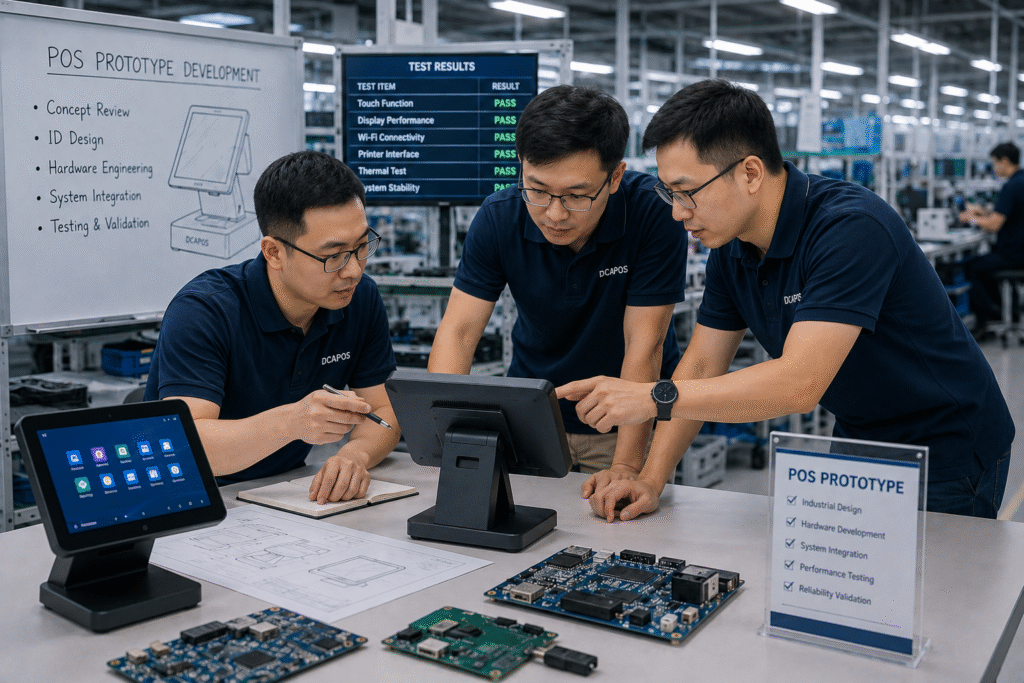
At DCAPOS, we believe the future of commercial POS hardware is not just about making terminals faster or thinner. It is about creating reliable hardware platforms that can connect with increasingly intelligent software ecosystems.
The future POS may not just tell businesses what happened. It may help them decide what to do next.