If you’re planning to launch your own POS hardware brand or integrate POS terminals into your software solution, you’ve likely come across two common manufacturing terms: OEM and ODM.
While these terms are often used interchangeably, they represent very different development models.
Choosing the right approach can significantly impact your development costs, time to market, product uniqueness, and long-term competitiveness.
In this guide, we’ll explain the differences between OEM and ODM POS systems, their advantages, limitations, and how to determine which option best suits your business.
What Is OEM?
OEM stands for Original Equipment Manufacturer.
In an OEM project, the customer already has a product concept or design and asks the manufacturer to build it according to specific requirements.
The manufacturer provides engineering support, production capabilities, and quality control, while the customer owns the product specifications and brand.
Typical OEM customization includes:
- Company logo
- Product color
- Customized packaging
- Firmware modifications
- Android launcher customization
- Pre-installed applications
- Interface changes
- Hardware configuration upgrades
For larger projects, OEM may also involve:
- New motherboard development
- Customized housing
- Additional interfaces
- Special peripheral support
OEM is ideal for companies seeking to build a unique product while leveraging an experienced manufacturing partner.
What Is ODM?
ODM stands for Original Design Manufacturer.
With ODM, the manufacturer has already developed a complete product platform.
Customers select an existing design and customize selected elements before production.
Common ODM options include:
- Logo printing
- Packaging design
- Boot animation
- Software customization
- Accessories
- Language settings
- Regional certifications
Because the hardware platform already exists, ODM projects are typically much faster than OEM projects.
For many software companies, ODM provides the best balance between customization, cost, and development speed.
OEM vs ODM: What’s the Difference?
| Feature | OEM | ODM |
|---|---|---|
| Product Design | Customer-led | Manufacturer-led |
| Development Time | Longer | Shorter |
| Initial Investment | Higher | Lower |
| Hardware Customization | Extensive | Limited |
| Branding | Full | Full |
| Time to Market | Medium to Long | Fast |
| Suitable for Large Projects | Excellent | Good |
When Should You Choose OEM?
OEM is the right choice if your business requires:
- Exclusive hardware design
- Unique industrial design
- Proprietary product features
- Custom motherboard layouts
- Long-term brand differentiation
OEM is commonly chosen by:
- Large POS brands
- Payment solution providers
- Enterprise system integrators
- Government projects
- Major retail solution providers
Although OEM requires more engineering effort, it creates stronger product differentiation.
When Is ODM the Better Choice?
ODM is often the preferred option for:
- POS software companies
- Startups
- Regional distributors
- Retail solution providers
- Restaurant POS vendors
Instead of investing months in product development, businesses can launch reliable hardware quickly while focusing on software and customer acquisition.
This approach significantly reduces development risk.
Typical OEM/ODM Development Process
Whether you choose OEM or ODM, a professional manufacturer should follow a structured workflow.
A typical project includes:
Step 1: Requirement Analysis
Understand the customer’s industry, software, operating system, and deployment environment.
Step 2: Product Selection
Recommend the most suitable POS platform based on performance, budget, and future scalability.
Step 3: Customization Proposal
Define hardware modifications, branding requirements, software changes, and accessories.
Step 4: Prototype Development
Build engineering samples for functional testing and software integration.
Step 5: Validation and Testing
Verify compatibility, reliability, and performance through extensive testing.
Step 6: Mass Production
After customer approval, begin full-scale manufacturing under strict quality control procedures.
Factors to Consider Before Choosing OEM or ODM
Before making a decision, consider the following questions:
- How quickly do you need to launch?
- What is your expected annual sales volume?
- Do you require exclusive product features?
- Will you need long-term hardware upgrades?
- What is your development budget?
Answering these questions helps determine the most suitable manufacturing model.
Why Engineering Experience Matters
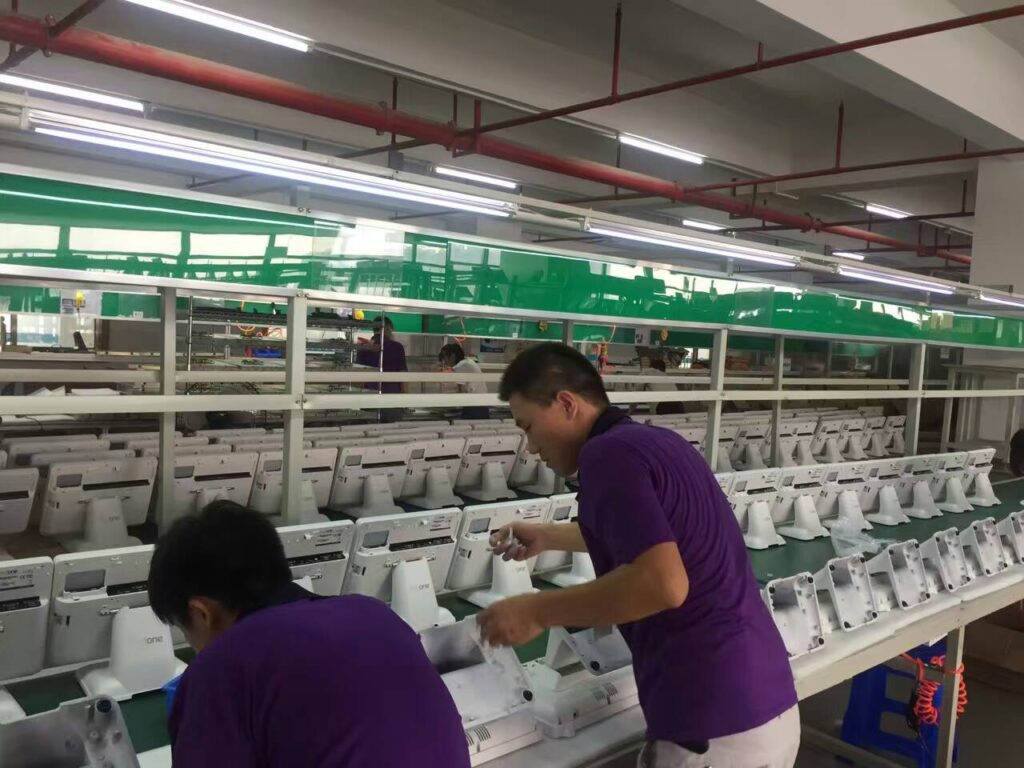
Whether you choose OEM or ODM, the success of your project depends on your manufacturing partner.
A professional POS manufacturer should offer:
- Industrial design expertise
- Mechanical engineering
- PCB development
- Android firmware customization
- Driver integration
- Reliability testing
- Certification support
- Supply chain management
- Long-term technical support
These capabilities help reduce development risks and ensure consistent product quality.
Why Many Global Brands Start with ODM
Many successful POS brands begin with ODM products.
As their businesses grow and market demand becomes clearer, they gradually transition to OEM projects for greater product differentiation.
This staged approach allows companies to reduce initial investment while building a strong market presence.
Final Thoughts
There is no universal answer to whether OEM or ODM is better.
The right choice depends on your business goals, budget, development timeline, and branding strategy.
If you need to launch quickly with minimal investment, ODM offers an efficient path to market.
If your goal is to create a unique product with long-term competitive advantages, OEM provides greater flexibility and control.
At DCAPOS, we support both OEM and ODM POS hardware projects, helping software companies, distributors, and retail solution providers develop reliable Android and Windows POS systems tailored to their business needs.
Whether you’re launching your first POS product or expanding an existing product line, choosing the right manufacturing strategy is the first step toward long-term success.