Many businesses looking for a new point-of-sale solution ask the same question:
Why buy a commercial POS terminal when a consumer tablet is much cheaper?
At first glance, the two devices may appear similar. Both have touchscreens, run Android or Windows, and can install POS software.
However, appearances can be deceiving.
Commercial POS hardware is designed for years of continuous operation in demanding business environments, while consumer tablets are built primarily for personal entertainment and light daily use.
Understanding the differences can help businesses make a smarter long-term investment.
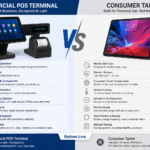
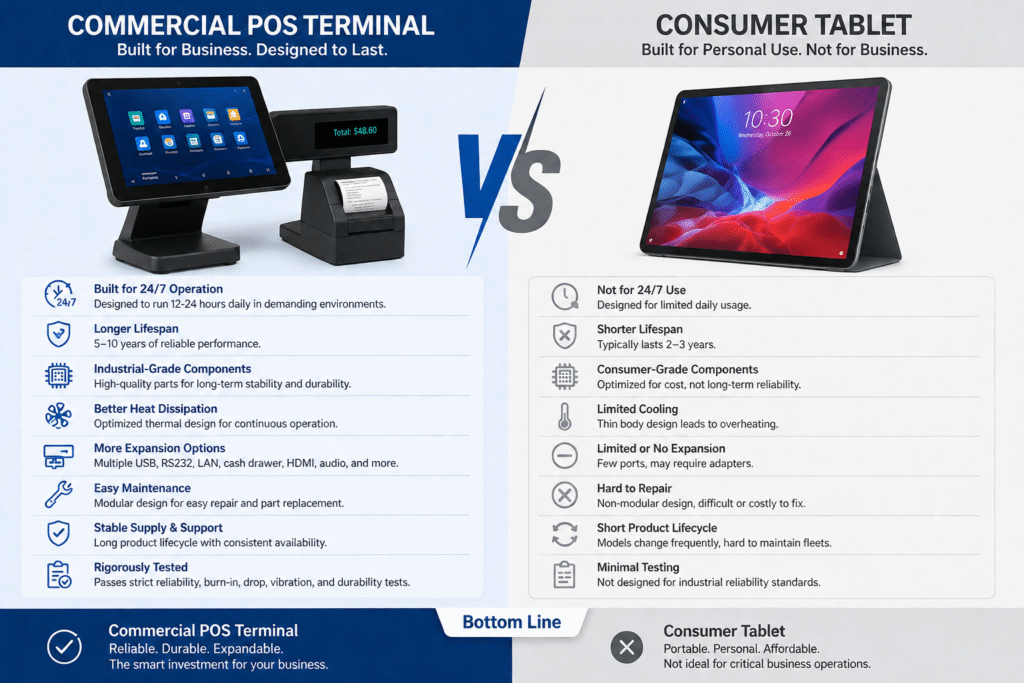
Consumer Tablet vs Commercial POS Hardware
Although both devices share touchscreen technology, their design goals are completely different.
| Feature | Consumer Tablet | Commercial POS Terminal |
|---|---|---|
| Intended Use | Personal use | Continuous commercial operation |
| Daily Runtime | 2–6 hours | 12–24 hours |
| Expected Lifespan | 2–3 years | 5–10 years |
| Peripheral Support | Limited | Extensive |
| Long-Term Availability | Short | Long Product Lifecycle |
| Serviceability | Limited | Designed for maintenance |
| Mounting Options | Optional | Commercial mounting solutions |
Commercial hardware is engineered for reliability rather than portability.
Built for Continuous Operation
One of the biggest differences is operating time.
A restaurant POS terminal may remain powered on:
- 14 hours per day
- Every day
- Throughout the entire year
Retail chains often keep POS terminals running continuously for inventory synchronization, cloud communication, and payment processing.
Consumer tablets are not designed for this workload.
Commercial POS terminals are.
Industrial-Grade Components
Commercial POS manufacturers select components differently from consumer electronics manufacturers.
Typical differences include:
Higher Quality LCD Panels
Designed for:
- Longer backlight life
- Better brightness consistency
- Continuous operation
Industrial Touch Panels
Commercial touchscreens withstand:
- Millions of touch operations
- Frequent cleaning
- Long-term use
Consumer tablet touchscreens prioritize portability and thinness.
Commercial Motherboards
Commercial POS motherboards are designed for:
- Stable operation
- Long product availability
- Better thermal performance
- Peripheral expansion
This improves long-term reliability.
Superior Thermal Management
Heat is one of the biggest enemies of electronic devices.
Commercial POS terminals include dedicated thermal design features such as:
- Aluminum heat sinks
- Optimized airflow
- Larger internal space
- Heat dissipation structures
Better cooling helps maintain stable performance under continuous workloads.
Consumer tablets typically have limited thermal capacity due to their compact design.
More Expansion Options
Businesses rarely use a POS terminal by itself.
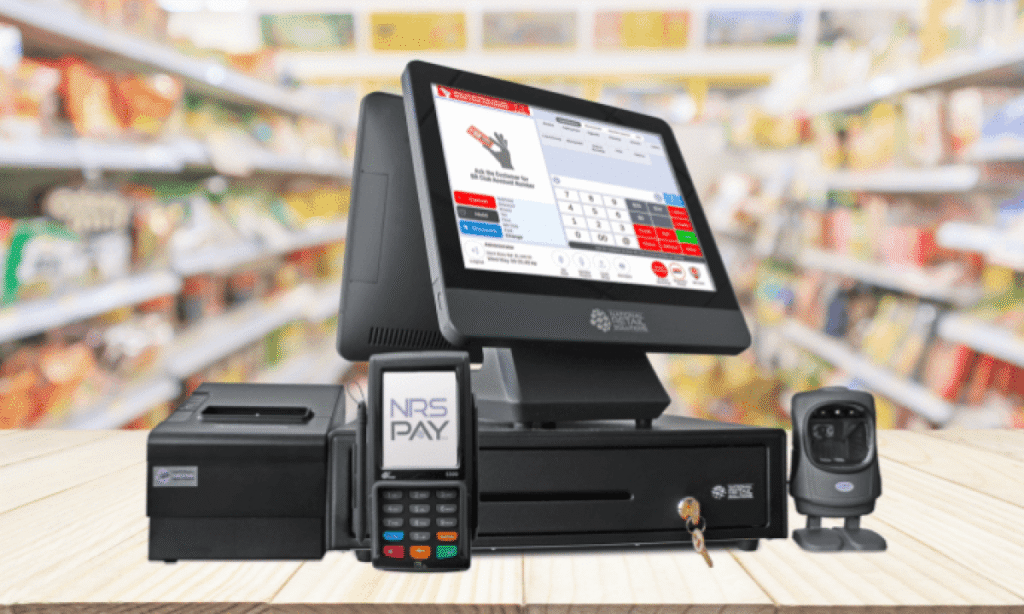
Commercial systems often connect:
- Receipt printers
- Barcode scanners
- Customer displays
- Cash drawers
- Payment terminals
- Weighing scales
- RFID readers
Commercial POS terminals provide:
- USB ports
- RS232 ports
- LAN
- HDMI
- Cash drawer ports
- Audio interfaces
Consumer tablets usually require adapters or wireless connections that may reduce reliability.
Designed for Easy Maintenance
When a consumer tablet fails, replacement is often the only practical option.
Commercial POS hardware is designed differently.
Many components can be serviced individually:
- Display
- Mainboard
- Power board
- Touch panel
- Stand
- Customer display
- I/O board
This reduces maintenance costs and extends product life.
Longer Product Availability
Consumer electronics change rapidly.
A tablet model may be discontinued within one year.
Commercial POS manufacturers typically maintain products for much longer.
Benefits include:
- Stable hardware platforms
- Spare parts availability
- Firmware maintenance
- Easier fleet management
This is especially important for chain stores operating hundreds or thousands of terminals.
More Stable Software Environment
Commercial POS terminals are optimized for business applications.
Manufacturers often provide:
- Long-term firmware support
- Security updates
- Device management tools
- SDKs
- API documentation
- Peripheral drivers
This creates a more stable software ecosystem than consumer devices.
Better Compatibility with Business Peripherals
Commercial POS systems are tested with professional devices including:
- Thermal receipt printers
- Kitchen printers
- Barcode scanners
- NFC payment terminals
- Customer displays
- Cash drawers
Compatibility testing reduces deployment risks.
Stronger Mechanical Design
Consumer tablets are designed to be:
- Thin
- Lightweight
- Portable
Commercial POS terminals prioritize:
- Structural rigidity
- Stability on countertops
- Adjustable viewing angles
- Cable management
- Resistance to vibration
These design choices improve usability in busy commercial environments.
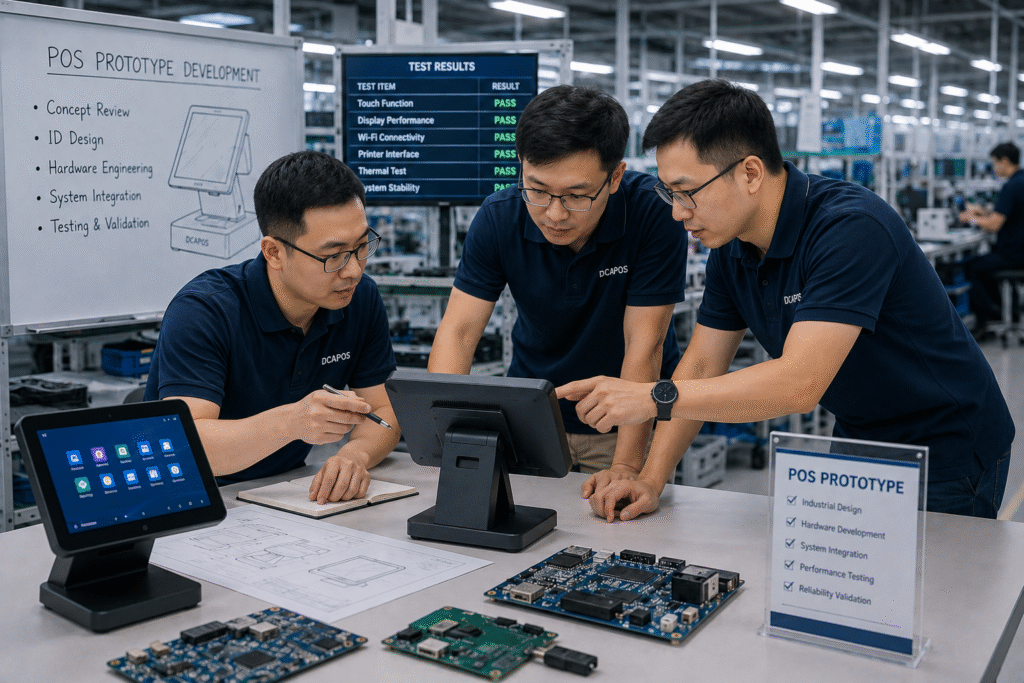
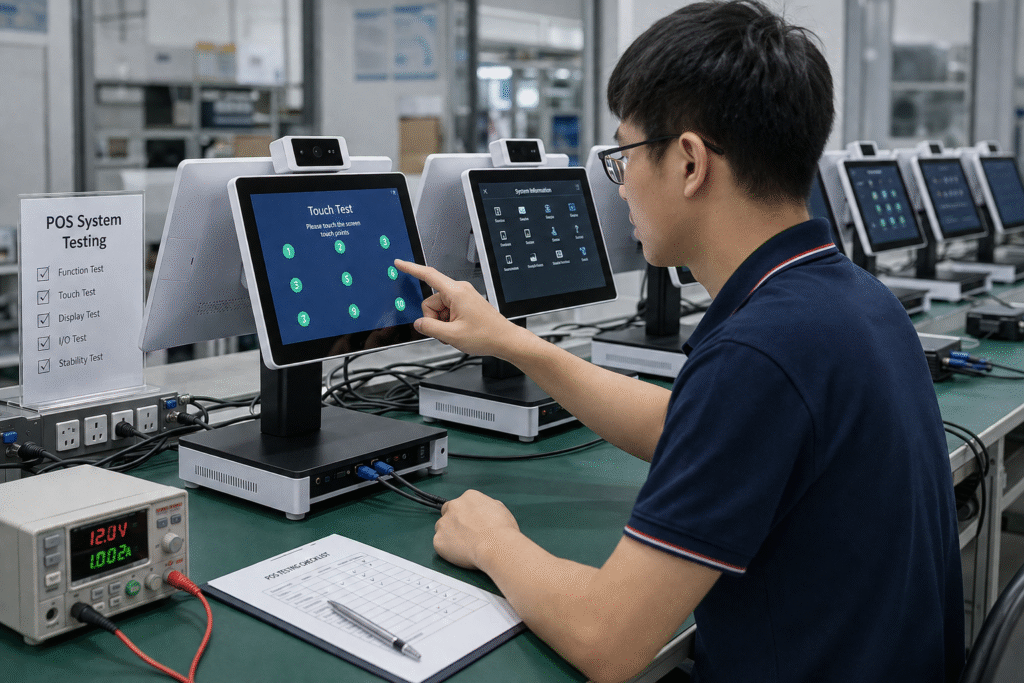
Higher Reliability Through Testing
Commercial POS hardware undergoes extensive validation before shipment.
Typical tests include:
- 24-hour burn-in testing
- Touchscreen life testing
- USB insertion testing
- Temperature testing
- Vibration testing
- Drop testing
- Functional verification
Consumer tablets are generally not subjected to the same level of commercial reliability testing.
Lower Total Cost of Ownership (TCO)
Although commercial POS terminals usually have a higher initial purchase price, they often reduce costs over time.
Benefits include:
- Longer service life
- Lower failure rates
- Reduced downtime
- Easier maintenance
- Better spare parts availability
For businesses, reliability often delivers greater value than the lowest purchase price.
Which Businesses Should Choose Commercial POS Hardware?
Commercial POS terminals are recommended for:
- Restaurants
- Coffee shops
- Bubble tea stores
- Retail chains
- Supermarkets
- Hotels
- Pharmacies
- Healthcare facilities
- Warehouses
- Self-service kiosks
These environments demand stable performance and long-term reliability.
When Is a Consumer Tablet Enough?
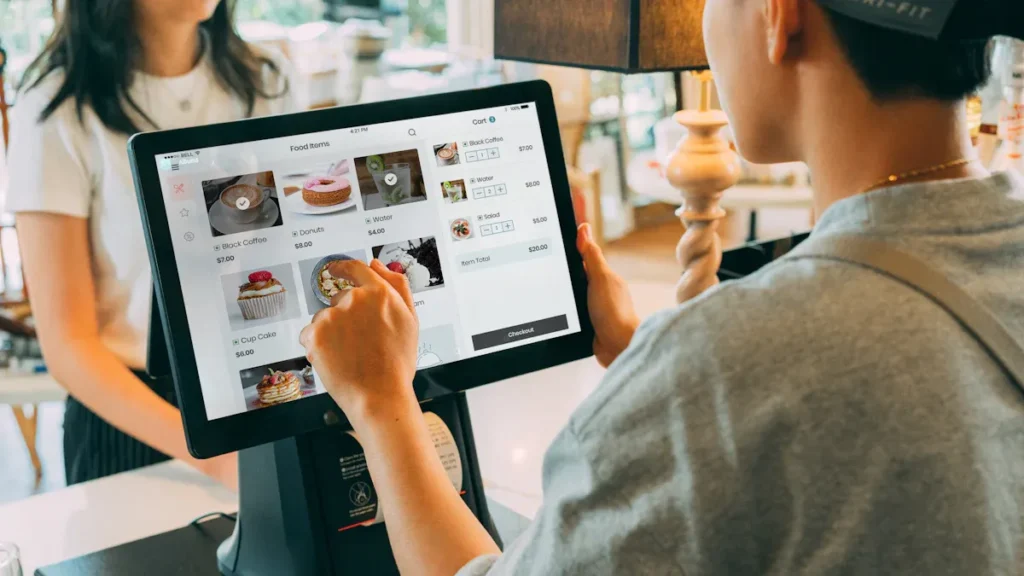
Consumer tablets can still be suitable for certain situations, such as:
- Temporary pop-up stores
- Small events
- Light-duty mobile ordering
- Personal demonstrations
However, for businesses that depend on uninterrupted daily operations, commercial POS hardware is usually the more reliable choice.
Final Thoughts
Although commercial POS terminals and consumer tablets may look similar, they are built with very different objectives.
Commercial POS hardware is designed for continuous operation, peripheral integration, long-term maintenance, and business-critical reliability.
Consumer tablets prioritize portability, entertainment, and personal use.
For businesses where downtime means lost revenue, investing in commercial POS hardware is not simply a hardware decision—it is an investment in operational stability and customer experience.
At DCAPOS, we design and manufacture commercial-grade Android and Windows POS terminals engineered to withstand the demands of modern retail, hospitality, healthcare, and self-service applications.
Reliable businesses deserve reliable hardware.