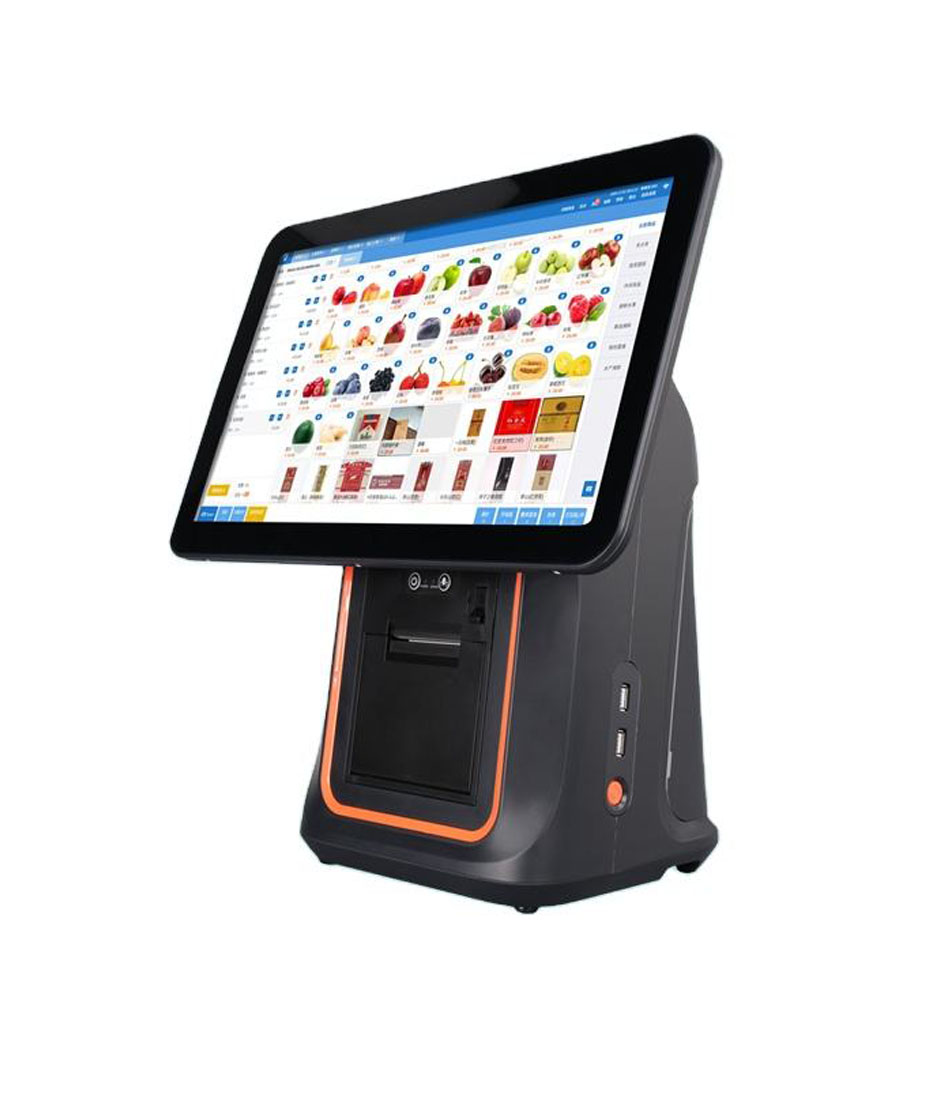
Two quotations arrive for what looks like the same 15.6-inch Android terminal. One is 96 a unit, the other 118. The instinct is to ask the second supplier to match the first, and the instinct is wrong, because the gap is almost never margin. It is seven fields that most buyers skim past, and each one moves the landed cost by more than the visible difference between the two prices.
This is a reading guide for a POS quotation. Not a negotiation tactic — a list of the lines where a supplier is honest or not, and what each one costs you over three years.
Field 1: the price basis
EXW, FOB, CIF and DDP are not interchangeable, and a quotation that does not state one is not a quotation. EXW means the goods are yours at the factory gate: you pay for export clearance, inland haulage, freight, insurance and duty. FOB moves the boundary to the ship’s rail. DDP puts everything on the supplier, which sounds convenient and means you cannot see what you are paying for the freight.
| Basis | What is included | Buyer still pays | When it makes sense |
|---|---|---|---|
| EXW | The unit, packed | Export clearance, haulage, freight, duty | You have a forwarder and buy several suppliers |
| FOB | Export clearance and loading | Freight, insurance, duty | The default for container volume |
| CIF | Freight and insurance to a named port | Duty, inland delivery, unloading | Small lots where you have no forwarder |
| DDP | Everything to your door | Nothing visible, which is the problem | Sample orders and one-off projects |
The comparison that is not a comparison
An EXW price and a DDP price differ by 15 to 25% on a terminal that ships in a carton, because a terminal is bulky relative to its value. Comparing them directly is how a buyer convinces themselves the domestic supplier is 20% more expensive when the difference is entirely freight.
Field 2: what is in the box
A terminal is shipped with or without a power adapter, a mains cord for the destination market, a printed manual in the right language, a driver disc, a mounting bracket and a paper roll. Each of those is a line item a supplier can quietly remove.
The adapter is the expensive one, at 8 to 15 depending on wattage and certification, and it is also the item most likely to be substituted: a 24 V 2.5 A adapter for a terminal with a 2.5 A peak draw has no margin, and a 2 A unit in the same box will reboot the terminal when the drawer kicks. The bracket matters for the same reason in reverse: a VESA plate that is not in the box becomes a locally sourced part that does not fit the cable exit.
The question that resolves this field is short: send the packing list, not the price. A packing list is a document with quantities on it, and it is much harder to leave a line out of than a paragraph of description.
Field 3: the screen line
“15 inch” describes two different products. A 15.6-inch 16:9 panel is 1920 by 1080 and measures roughly 344 by 194 mm. A 15-inch 4:3 panel is 1024 by 768 and measures about 304 by 228 mm. The diagonal is within four percent; the shape is not.
| Panel | Native resolution | Active area | What it changes |
|---|---|---|---|
| 15.6-inch, 16:9 | 1920 × 1080 | About 344 × 194 mm | Wide enough for a product grid and a basket side by side |
| 15-inch, 4:3 | 1024 × 768 | About 304 × 228 mm | More rows for a menu list, less width for a category column |
| 14-inch, 16:9 | 1366 × 768 | About 309 × 174 mm | Fits a shallow counter; fewer modifier buttons visible |
| 11.6-inch, 16:9 | 1366 × 768 | About 256 × 144 mm | Only workable with a redesigned till layout |
The resolution line matters less than the active area line, and the active area is almost never printed. If the application shows a grid of product tiles, the number of tiles that fit is a function of pixels, not inches, so ask for the resolution and the active area and check them against a screenshot of your own layout.
Field 4: the battery line
A battery is quoted by capacity, and the capacity on the label is not the capacity you get. Marked capacity is measured at a favourable discharge rate on a fresh cell; rated capacity is what the pack delivers at 0.2 C within the protection board’s cutoff. A pack labelled 5,000 mAh commonly rates at 4,200 to 4,600, and that difference is 12 to 16% of runtime.
Two more numbers belong next to it and rarely appear. The cell grade — A cells from a tier-one maker versus B cells from a secondary market — is the difference between 500 cycles to 80% and 300, and it is invisible from outside the pack. And the cycle count at which the pack is rated, because “long life” against no number is not a specification.
For a handheld this is the field that decides the three-year cost. A pack that reaches 80% at 300 cycles is a pack that will not hold a shift in year two, and a shift-length failure is a fleet-wide problem that arrives all at once because all the packs were made in the same month.
Field 5: the print head
An 80 mm thermal print head is rated in kilometres of paper, and the market offers two populations: 50 km heads and 100 km heads, from different makers, at noticeably different prices. A busy till prints 20 to 40 receipts a day at 15 cm each, which is about 2 km a year — so a 50 km head lasts around twenty years of receipts and dies of something else first.
That arithmetic is why print head life is usually the wrong thing to optimise, and why the right question is different: what does a replacement head cost, and can it be changed without returning the printer. A head costing 30 to 60 that clips in with two screws is a maintenance item. A head that is soldered to a board and shipped back to the factory is a fortnight without a till.
The related line is the paper specification. A printer set for 80 µm paper and fed 55 µm paper produces faint, curly receipts and a head that runs hot, and the supplier will correctly say the printer is fine.
Field 6: the warranty clock
Twelve months from what date. Ex-factory is the supplier’s favourite because it starts the day the carton leaves, which is before four to six weeks at sea and however long the goods sit in your warehouse. Twelve months from ex-factory is realistically nine months of cover by the time a unit is installed.
| Start point | Effective cover for a site | Who carries the gap |
|---|---|---|
| Ex-factory date | About 9–10 months | The buyer |
| Arrival at your warehouse | About 11–12 months | Shared |
| Installation date, registered | A full 12 months | The supplier, if the term is written that way |
The third row is achievable and rarely asked for. It requires serial registration at installation, which most suppliers can support because they already bind serial to MAC at outgoing inspection. It costs them a warranty database and costs you nothing but a process.
Field 7: what is not quoted but assumed
The last field is the set of costs that exist in the deal and not on the page. Each is small on its own and together they are larger than the price difference that started the conversation.
- Certification cost and ownership. Who pays for the EMC report, and whose name is on the Declaration of Conformity.
- Sample cost and whether it is credited. A sample at full price, credited against the first order, is standard; a sample at three times the unit price is a profit centre.
- Tooling, if any. Amount, who owns the steel, and what happens to it if you leave.
- MOQ per model, not per order. An order of 1,000 split across four models is four small lots, and the price reflects that.
- Spare parts price list. Locked for how long, and at what uplift.
- Payment terms. Thirty percent deposit is normal; the balance before shipment removes your leverage on a short shipment.
None of these belong in a negotiation at the end. They belong in the comparison at the beginning, because the supplier who is cheapest on unit price and silent on spare parts is the one whose cost arrives in year two.
Comparing two quotes without a fight
Normalise both to one number: landed cost per unit per year of service. That means adding freight and duty to the unit price, adding the value of what is in the box, subtracting nothing for a longer warranty but adding the expected cost of the failures it excludes, and dividing by the years you expect to keep the unit.
| Line | Supplier A | Supplier B |
|---|---|---|
| Unit price, FOB | 96 | 118 |
| Freight and duty per unit | 14 | Included (DDP) |
| Adapter and bracket in box | Not included, add 18 | Included |
| Rated battery capacity | 4,200 mAh | 4,800 mAh |
| Warranty start | Ex-factory, 12 months | Arrival, 12 months |
| Spare print head | Not listed | 34, two screws |
| Landed cost, year one | 128 | 118 |
| Years 2–3 parts | Pack at 42, head at unknown | Pack at 45, head at 34 |
In this example the more expensive quote is the cheaper product, and it took four questions to establish that: what is in the box, what is the rated capacity, when does the warranty start, and what does a print head cost. None of them is a negotiation.
FAQ
Is the cheapest quotation usually a bad product?
Not necessarily. It is usually a different product: a smaller adapter, a lower-rated battery, a shorter warranty or a narrower panel. The price is a summary of choices, and the job is to find out which choices were made.
Should I ask suppliers to match each other’s prices?
Only after normalising the quotes. Asking for a match on a number that excludes the adapter and starts the warranty at the factory gate is asking the honest supplier to absorb someone else’s omissions.
What is the one line to check first?
The price basis. An EXW quote compared against a DDP quote misstates the difference by 15 to 25%, which is larger than any concession you will negotiate.
Where to go next
A quotation is a set of choices written down. Read the seven fields, then read the documents behind them:
DCA-155A 15.6-inch Android terminal POS-8370 80 mm printer, replaceable head DCA-H62 handheld, rated pack who owns the tooling and the certificate fifteen questions before the quotation what the warranty will not cover in year four · what a POS system is made of
Specifying the hardware? The hardware side is covered in The five lines on a POS bill — which of them are hardware and which are not.