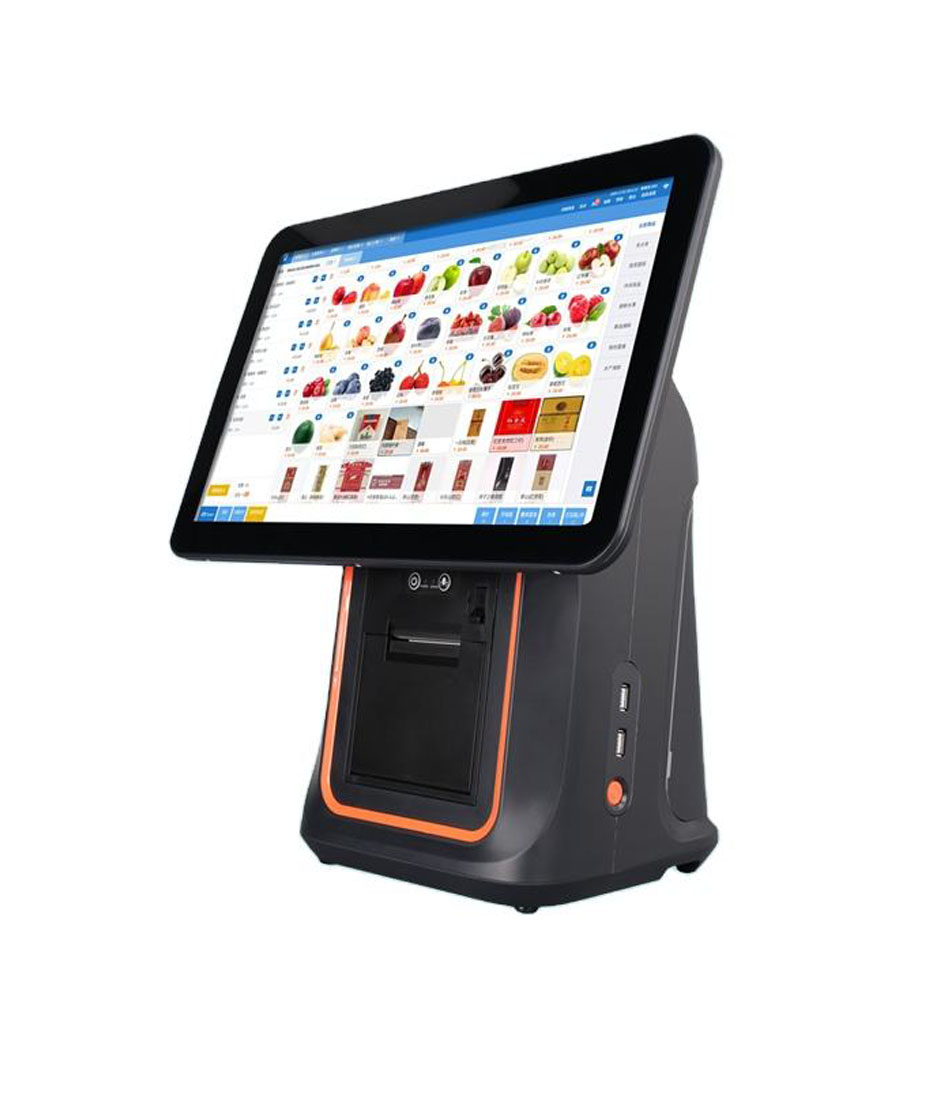
Artificial intelligence is changing the way restaurants operate, and the Point-of-Sale (POS) system is becoming an important part of this transformation.
For years, restaurant POS systems were mainly used to take orders, process payments, print receipts, and track sales. Modern restaurant POS platforms can now connect much more business data, including sales, inventory, customer information, labor, menus, and online orders.
AI can turn this data into useful insights and recommendations.
Instead of simply telling restaurant owners what happened, an AI-enabled POS system can increasingly help them understand why it happened and what they should do next.
This article explores how AI is changing restaurant POS systems, the most practical applications today, and what businesses should consider when choosing AI-ready POS hardware.
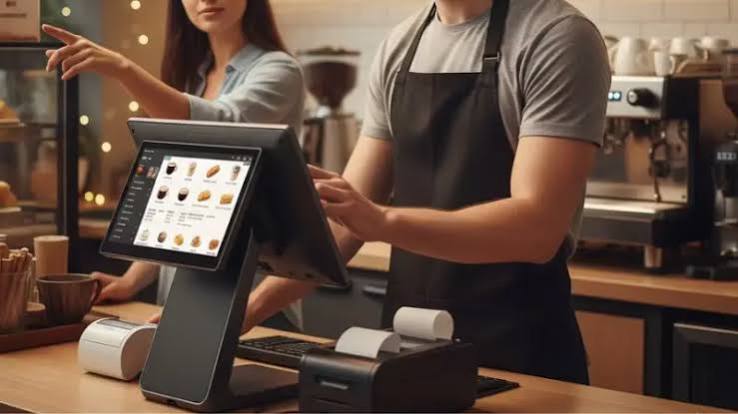
What Is an AI-Powered Restaurant POS System?
An AI-powered restaurant POS system combines traditional POS functions with artificial intelligence and data analytics.
A traditional POS may tell a restaurant:
“Sales were $8,500 yesterday.”
An AI-powered system could provide additional insight:
“Dinner sales increased by 12% compared with last Tuesday, while average order value decreased by 4%.”
It could then help identify possible reasons, such as changes in product mix, promotions, or customer traffic.
This makes AI particularly useful for restaurant managers who need to make decisions quickly.
Why AI Is Becoming Important for Restaurant POS Systems
Restaurants generate large amounts of operational data every day.
This includes:
- Orders
- Sales
- Menu items
- Inventory
- Discounts
- Customer information
- Employee activity
- Online orders
- Delivery orders
- Peak operating hours
Traditionally, managers had to analyze much of this information manually.
AI can process large amounts of structured data much faster and identify patterns that may be difficult to see in conventional reports.
This is one reason AI is increasingly being integrated into restaurant technology platforms.
1. AI Makes Restaurant Sales Data More Useful
Sales reporting is one of the most practical applications of AI in restaurant POS systems.
A traditional POS report may show:
- Total sales
- Number of transactions
- Average order value
- Best-selling products
AI can go further by analyzing trends and relationships within the data.
For example:
Which products are growing fastest?
Which menu items are losing popularity?
Which days have unusually low sales?
Which products are frequently purchased together?
Instead of manually comparing multiple reports, restaurant managers can use AI to summarize the information and highlight important changes.
2. AI Can Help Restaurants Forecast Demand
Predicting demand is one of the biggest challenges in restaurant operations.
Too much food can lead to waste.
Too little inventory can lead to stockouts.
AI can analyze historical POS data to identify demand patterns.
For example, the system may consider:
- Previous sales
- Day of the week
- Seasonal patterns
- Holidays
- Promotions
- Product popularity
- Historical ordering behavior
A restaurant could use these insights to estimate how much inventory it may need for an upcoming busy period.
AI does not eliminate uncertainty, but better forecasting can help managers make more informed purchasing decisions.
3. AI Can Improve Inventory Management
Inventory management is closely connected to the POS system.
Every sale changes inventory levels.
When the POS, inventory management system, and AI analytics work together, restaurants can gain a clearer picture of what is happening with their stock.
AI can help identify:
- Fast-moving products
- Slow-moving ingredients
- Potential stockouts
- Unusual consumption patterns
- Excess inventory
- Purchasing trends
For restaurants with multiple locations, AI can also help compare inventory and sales patterns between stores.
4. AI Can Help Optimize Restaurant Menus
Menu optimization is another area where AI can provide useful insights.
A restaurant may have dozens or hundreds of menu items, but not every item contributes equally to revenue or profit.
AI can analyze factors such as:
- Sales volume
- Revenue
- Profit margin
- Order frequency
- Product combinations
- Time-of-day performance
For example, the system may identify that a particular beverage is frequently ordered with a specific meal.
The restaurant could then create a bundle or recommendation to increase the average order value.
AI can therefore help restaurants move from simply selling products to making more data-driven menu decisions.
5. AI Can Support Personalized Recommendations
Restaurants increasingly collect customer purchasing information through loyalty programs and digital ordering platforms.
AI can use this information to identify purchasing patterns.
For example:
A customer frequently orders a particular coffee but rarely purchases food.
The system could potentially recommend a suitable breakfast item or promotion.
Similarly, an online ordering system could recommend products based on previous purchases or frequently purchased combinations.
This can create a more personalized ordering experience while potentially increasing cross-selling opportunities.
6. AI Can Improve Labor Planning
Labor management is another major challenge for restaurants.
Staffing requirements can change significantly throughout the day.
A restaurant may need more employees during:
- Lunch
- Dinner
- Weekends
- Holidays
- Special events
Historical POS data can reveal when customer demand is highest.
AI can analyze these patterns and help managers make more informed staffing decisions.
For example:
“Friday dinner transactions are consistently 25% higher than the weekly average.”
This information can help managers plan staffing levels more effectively.
7. AI Can Detect Unusual POS Activity
AI can also be used to identify unusual patterns.
For example:
- An unexpected increase in refunds
- Unusually high discounts
- Sudden changes in transaction values
- Abnormal sales patterns
- Unexpected inventory consumption
These patterns do not automatically mean there is a problem.
However, they can alert managers that something deserves attention.
This is particularly useful for restaurant groups operating multiple locations.
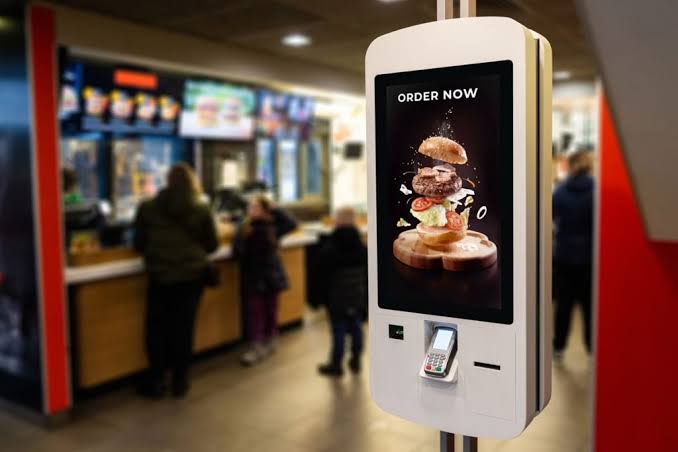
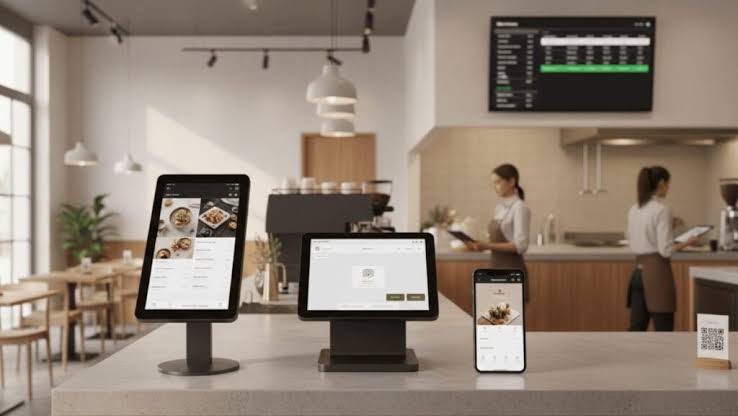
8. AI and Self-Ordering Kiosks
Self-ordering kiosks are another important part of the AI and restaurant POS ecosystem.
A conventional kiosk presents customers with a predefined menu.
An AI-enabled ordering interface could potentially provide a more conversational experience.
For example:
“I want a vegetarian meal with no dairy.”
The system could recommend suitable products based on the restaurant’s menu and available options.
AI can also support:
- Product recommendations
- Upselling
- Cross-selling
- Natural-language interaction
- Multilingual ordering
The kiosk then becomes more than a touchscreen menu—it becomes an intelligent customer interface.
9. AI Can Connect the Entire Restaurant Technology Ecosystem
The future of restaurant POS technology is not just about adding AI to one terminal.
The larger opportunity is connecting multiple systems.
A modern restaurant technology ecosystem may include:
POS Terminal
↓
Kitchen Display System
↓
Self-Ordering Kiosk
↓
Receipt Printer
↓
Customer Display
↓
Payment Terminal
↓
Inventory Management
↓
CRM & Loyalty
↓
Online Ordering
↓
AI Analytics
When these systems share reliable data, AI can provide much more useful insights.
This makes system integration increasingly important for restaurant operators.
10. What Role Does POS Hardware Play in AI?
AI is often associated with software and cloud computing, but hardware remains essential.
The physical POS terminal provides the interface through which employees interact with the system.
A restaurant POS terminal may need to support:
- Touchscreen interaction
- Barcode scanning
- Receipt printing
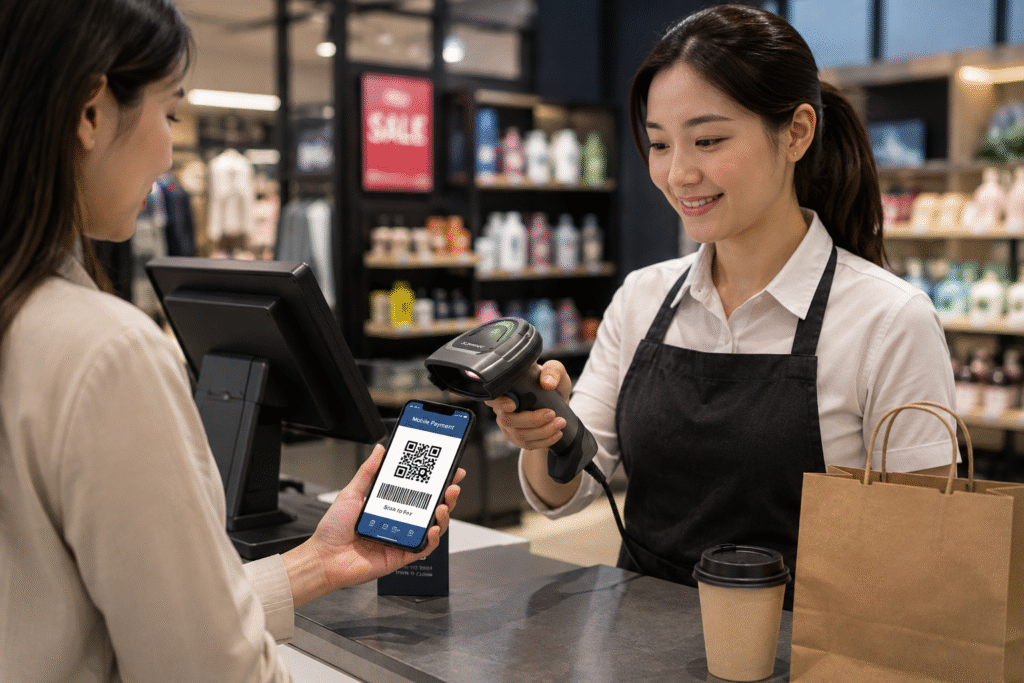
- Payment devices
- Customer displays
- Cash drawers
- Kitchen printers
- Network communication
As AI applications become more sophisticated, hardware performance may also become increasingly important.
11. AI-Ready POS Hardware
For businesses planning a new POS deployment, it can be useful to think beyond today’s requirements.
An AI-ready POS terminal may benefit from:
More Powerful CPUs
Higher-performance processors can support more demanding applications.
More RAM
Additional memory can improve multitasking and application performance.
Faster Storage
Faster storage can improve system responsiveness and application loading.
Better Connectivity
Reliable Wi-Fi, Ethernet, Bluetooth, USB, and other interfaces are essential for connected restaurant environments.
Strong Thermal Design
Higher computing performance can increase heat generation, making thermal management increasingly important.
12. Cloud AI vs Edge AI for Restaurant POS
AI processing can happen in the cloud or closer to the POS device.
Cloud AI
Cloud-based AI is suitable for tasks such as:
- Business analytics
- Multi-store reporting
- Demand forecasting
- Centralized data processing
It provides access to powerful computing resources and centralized model updates.
Edge AI
Edge AI performs some processing locally.
This can be useful when applications require:
- Low latency
- Local processing
- Reduced dependence on cloud connectivity
- Fast device responses
For POS hardware manufacturers, this may create new requirements for processors with AI acceleration capabilities.
13. AI Does Not Replace the POS System
It is important to understand that AI does not necessarily replace traditional POS functions.
The POS system still needs to handle essential operations such as:
- Order processing
- Payment processing
- Product management
- Receipt printing
- Peripheral communication
- Transaction records
AI adds an intelligence layer on top of these functions.
A useful way to think about the evolution is:
Traditional POS
Record → Report
Modern POS
Record → Analyze
AI-Powered POS
Record → Analyze → Predict → Recommend
This is where AI can create additional value.
14. Data Quality Is Critical
AI is only as useful as the data it receives.
If a restaurant has:
- Incorrect menu information
- Incomplete inventory data
- Poorly configured products
- Disconnected systems
- Inconsistent customer records
AI recommendations may not be accurate.
This means restaurants should focus not only on AI features but also on the quality and integration of their underlying POS data.
Before investing in AI, businesses should make sure their POS infrastructure is reliable and properly connected.
15. What Should Restaurants Look for in an AI-Ready POS System?
When selecting a restaurant POS system in 2026, consider more than the software interface.
Look at the complete ecosystem.
Software
- AI capabilities
- Reporting
- Inventory management
- CRM
- Loyalty
- Online ordering
- API integrations
Hardware
- CPU performance
- RAM
- Storage
- Display
- Connectivity
- Peripheral support
- Thermal design
Integration
- Payment systems
- Kitchen systems
- Kiosks
- Printers
- Customer displays
- Inventory platforms
Long-Term Support
- Firmware updates
- Security updates
- SDK support
- API documentation
- Spare parts
- Product lifecycle
A good POS solution should be capable of supporting both current operations and future technology requirements.
The Future of AI in Restaurant POS
The most interesting development is not simply adding an AI chatbot to a POS system.
The larger opportunity is creating a POS platform that continuously understands restaurant operations.
Imagine a system that can tell a manager:
“Sales are lower than expected this afternoon.”
Then:
“The main difference is a decrease in beverage orders.”
And finally:
“Consider promoting the afternoon beverage bundle.”
This represents a major change in how restaurant managers interact with business technology.
Instead of spending time searching through reports, they can focus on decisions.
AI and the Next Generation of Restaurant POS Hardware
As restaurant software becomes more intelligent, POS hardware will also evolve.
Future commercial POS terminals may need to support:
- Higher-performance processors
- AI acceleration
- Larger memory capacity
- Faster storage
- Better connectivity
- Advanced peripheral integration
- Longer product lifecycles
However, reliability will remain just as important as performance.
A restaurant cannot afford to replace its POS hardware every time software technology changes.
For this reason, POS manufacturers need to design hardware platforms that can support evolving software ecosystems over several years.
Final Thoughts
AI is changing the role of the restaurant POS system.
Traditional POS systems were primarily designed to process transactions and generate reports.
Modern systems are becoming increasingly connected, data-driven, and intelligent.
AI can help restaurants:
- Understand sales
- Forecast demand
- Manage inventory
- Optimize menus
- Improve labor planning
- Personalize customer experiences
- Identify unusual activity
- Support self-ordering kiosks
But successful AI adoption requires more than adding an AI feature.
It requires reliable POS hardware, accurate data, strong system integration, and software designed around real restaurant workflows.
For POS hardware manufacturers, this creates an important opportunity.
The next generation of restaurant POS terminals will not simply need to be faster. They will need to be more connected, more flexible, and ready to support increasingly intelligent software.
At DCAPOS, we believe the future of restaurant POS hardware is about building reliable platforms that can evolve alongside the software and AI technologies businesses depend on.
The restaurant POS of the future won’t just record what happened. It will help restaurants understand what is happening—and decide what to do next.